Quotessence
Home / Quotes / Quote by Bernhard Schlink

Quote by Bernhard Schlink

“I took all the blame. I admitted mistakes I hadn't made, intentions I'd never had. Whenever she turned cold and hard, I begged her to be good to me again, to forgive me and love me. Sometimes I had the feeling that she hurt herself when she turned cold and rigid. As if what she was yearning for was the warmth of my apologies, protestations, and entreaties. Sometimes I thought she just bullied me. But either way, I had no choice.”

Quote by Bernhard Schlink

Work

The Reader

In this poignant narrative, a young man falls in love with an older woman, who remains enigmatic until the novel's climax. The story delves into the complexities of human relationships and the impact of historical events on individual lives. more

Author

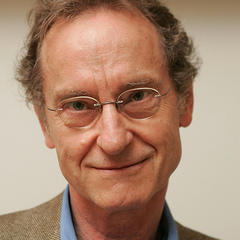
Bernhard Schlink
Bernhard Schlink

German writer known for his novel 'The Reader'. Born on July 6, 1944, Bernhard Schlink's works often explore themes of morality, history, and memory. more

You May Also Like

“We sit there, our eyes locked on one another, for several seconds. I know in my heart we're both thinking the same thing. Jacob leans forward over the candle, the shadow of the flame dancing against his bottom lip. I lean forward to meet him as well. It's a kiss full of promise, of trust, and of all that is magic.”

“Basketball is an intricate, high-speed game filled with split-second, spontaneous decisions. But that spontaneity is possible only when everyone first engages in hours of highly repetitive and structured practice--perfecting their shooting, dribbling, and passing and running plays over and over again--and agrees to play a carefully defined role on the court. This is the critical lesson of improve, too, and it is also a key to understanding a puzzle of Millennium Challenge: spontaneity isn't random.”

“Why is it that sometimes our prayers seem not to be answered? This is a manifestation of the Buddha's wisdom, so that we can deepen our prayers, become stronger people, live more profound lives and secure deeper, more lasting good fortune. If our slightest prayer was answered immediately, we would become lazy and degenerate. And we could not hope to build a life of great dignity and substance.”

“He did not understand all he had heard, but from his clandestine glimpse into the privacy of these two, with all the world that his short experience could conceive of at their feet, he had gathered that life for everybody was a struggle, sometimes magnificent from a distance, but always difficult and surprisingly simple and a little sad.”