“I have yet to see a successful prediction about the physical world that was inferred or extrapolated from the content of any religions document.”
Quote by Neil deGrasse Tyson
Work
The Sky is Not the Limit: Adventures of an Urban Astrophysicist
This book takes readers on an engaging journey with an urban astrophysicist, highlighting the fusion of scientific inquiry and urban exploration. It delves into the author's personal experiences, showcasing the intertwining of scientific discovery with the complexities of city life. more
Author
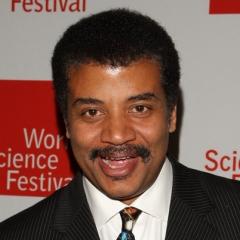
Neil deGrasse Tyson
Neil deGrasse Tyson is an American astrophysicist, science communicator, and television personality. Born on October 5, 1958, he is renowned for his deep understanding of the cosmos and his ability to popularize scientific knowledge. Tyson grew up in New York City and earned a Ph.D. in astronomy from Columbia University. He served as the director of the Hayden Planetarium at the American Museum of Natural History and has been a member of various scientific committees. more
You May Also Like
Source: The Works of Robert G. Ingersoll
“I wanted to be cute. That's the terrible thing. I should have had more sense.”
Source: Dorothy Parker in Her Own Words
Source: A Man Without a Country