Quotessence
Home / Quotes / Quote by Wendell Berry

Quote by Wendell Berry

Work

Sex, Economy, Freedom & Community: Eight Essays

Sex, Economy, Freedom & Community: Eight Essays is a thought-provoking compilation that examines the intersections of human sexuality, economic systems, personal freedom, and social cohesion. The essays within this volume offer a variety of viewpoints and analyses, encouraging readers to consider the complexities of these subjects in contemporary society. more

Author
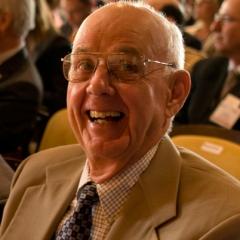
Wendell Berry
Wendell Berry

Wendell Berry, an American novelist born on August 5, 1934, is renowned for his profound descriptions of rural life and his critical views on modern industrial civilization. more

You May Also Like

“There can be no solution to the challenge of climate change that is not global. But if we can come together in partnership, we can transform today's challenge into tomorrow's opportunity - an opportunity for green growth and sustainable prosperity... we also need a strong bottom-up push from academics and opinion-shapers such as you. Universities such as yours are founts of ideas and innovation. They are furnaces of innovation and entrepreneurship. So, send forth this word.”

“There would be no call for ecological campaigning had nature not been exploited and abused. We experience the ground now bringing forth thistles as soil erosion devastates formerly arable land and deserts overtake fertile farms. Rivers and the atmosphere are polluted thoughtlessly and we are fearful of the consequences of a depleted ozone layer and the devastation of the greenhouse effect. We are not quite at home in our world, and somewhere in each of us there is a nostalgia for a paradise that has been lost.”

“To build enormous palaces, to conquer or to mimic nature, to ransack the world in order to gratify the passions of a man, is not thought of, but to add a few yards of land to your field, to plant an orchard, or enlarge a dwelling, to always be making life more comfortable and convenient, to avoid trouble, and to satisfy the smallest wants without effort and almost without cost. These are small objects, but the soul clings to them; it dwells upon them closely and day by day, till they at last shut out the rest of the world and sometimes intervene between itself and heaven.”

“To sustain an environment suitable for man, we must fight on a thousand battlegrounds. Despite all of our wealth and knowledge, we cannot create a redwood forest, a wild river, or a gleaming seashore.”

“Unrestrained automobility, hedonism, individualism, and conspicuous consumption cannot be sustained because they take more than they give back. A spiritually impoverished world cannot be sustained because meaninglessness, anomie, and despair will corrode the desire to be sustained and the belief that humanity is worth sustaining. But these are the very things that distinguish the modern age from its predecessors, Genuine sustainability, in other words, will come not from superficial changes but from a deeper process akin to humankind growing up to a fuller stature.”

“We are now, measurably, reducing the availability of these life-supporting goods which we can think of (though only on the conditions of good health and good care) as self-renewing or "sustainable." We are also destroying rapidly the supplies of the fossil fuels, which are limited and not renewable, and on which we have become totally dependent.”

“We continually make decisions in private which affect the commonweal, as the ecologists (to take but one example) have shown us. When I keep my house warmer than it needs to be, I consume fuel which might help someone else keep warm, or keep a job. When the food I eat is high on the protein chain I contribute to a maldistribution of protein around the world. When I teach my children to be primarily concerned with private gain, I diminish the ranks of public leadership in the rising generation.”

“We have reached a point where the value we do add to our economy is now being outweighed by the value we are removing, not only from future generations in terms of diminished resources, but from ourselves in terms of unlivable cities, deadening jobs, deteriorating health, and rising crime. In biological terms, we have become a parasite and are devouring our host.”