Quotessence
Home / Quotes / Quote by William Blake

Quote by William Blake

“Rhetoric completes the tools of learning. Dialectic zeros in on the logic of things, of particular systems of thought or subjects. Rhetoric takes the next grand step and brings all these subjects together into one whole.”

Quote by William Blake

Author
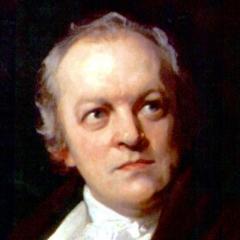
William Blake
William Blake

William Blake (November 28, 1757 - August 12, 1827) was an English Romantic poet, painter, and printmaker. Known for his unique visual art and profound philosophical thoughts, he is considered one of the most innovative poets in the history of English literature. more

You May Also Like

“The instructor has to teach history, cosmogony, psychology, ethics, the laws of nations. How can he do it without saying anything favorable or unfavorable about the beliefs of evangelical Christians, Catholics, Socinians, Deists, pantheists, materialists, or fetish worshipers, who all claim equal rights under American institutions? His teaching will indeed be "the play of Hamlet, with the part of Hamlet omitted."”

“Every line of true knowledge must find its completeness as it converges on God, just as every beam of daylight leads the eye to the sun. If religion is excluded from our study, every process of thought will be arrested before it reaches its proper goal. The structure of thought must remain a truncated cone, with its proper apex lacking.”

“A Christian boy or girl can learn mathematics, for example, from a teacher who is not a Christian; and truth is truth however learned. But while truth is truth however learned, the bearing of truth, the meaning of truth, the purpose of truth, even in the sphere of mathematics, seem entirely different to the Christian from that which they seem to the non-Christian; and that is why a truly Christian education is possible only when Christian conviction underlies not a part but all, of the curriculum of the school.”

“For we let our young men and women go out unarmed in a day when armor was never so necessary. By teaching them to read, we have left them at the mercy of the printed word. By the invention of the film and the radio, we have made certain that no aversion to reading shall secure them from the incessant battery of words, words, words. They do not know what the words mean; they do not know how to ward them off or blunt their edge or fling them back; they are prey to words in their emotions instead of being the masters of them in their intellects.”

“There is also one excellent reason why the veriest amateur may feel entitled to have an opinion about education. For if we are not all professional teachers, we have all, at some time or other, been taught. Even if we learned nothing-perhaps in particular if we learned nothing-our contribution to the discussion may have a potential value.”