Quotessence
Home / Quotes / Quote by Jean-Jacques Rousseau

Quote by Jean-Jacques Rousseau

Work

Emile

Emile is a seminal work in the field of pedagogy, offering a comprehensive examination of the principles and methods of education. The book delves into the psychological and moral development of children, advocating for a holistic approach to learning that emphasizes the importance of freedom and individuality. more
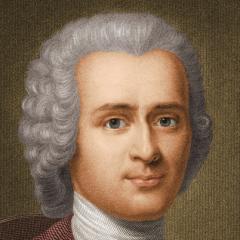
Author

Jean-Jacques Rousseau

Jean-Jacques Rousseau was a French philosopher, writer, and composer, considered one of the most important figures of the Enlightenment. His works have had a profound impact on subsequent literature, political, and social theories. more

You May Also Like

“For we let our young men and women go out unarmed in a day when armor was never so necessary. By teaching them to read, we have left them at the mercy of the printed word. By the invention of the film and the radio, we have made certain that no aversion to reading shall secure them from the incessant battery of words, words, words. They do not know what the words mean; they do not know how to ward them off or blunt their edge or fling them back; they are prey to words in their emotions instead of being the masters of them in their intellects.”

“There is also one excellent reason why the veriest amateur may feel entitled to have an opinion about education. For if we are not all professional teachers, we have all, at some time or other, been taught. Even if we learned nothing-perhaps in particular if we learned nothing-our contribution to the discussion may have a potential value.”

“We always think we are right, and - search as I have - there is no evil under the sun that somebody somewhere won't argue is actually a good, no idiocy that hasn't got its perfectly serious defenders, and no tyrant, past or present - no matter how bloody - without some bunch of zealot schmucks to defend him or his reputation till the last breath in their bodies - or preferably somebody else's.”

“To translate kinesics or paralinguistic messages into words is likely to introduce gross falsification due not merely to the human propensity for trying to falsify statements about "feelings" and relationship and to the distortions which arise whenever the products of one system of coding are dissected onto the premises of another, but especially to the fact that all such translation must give to the more or less unconscious and involuntary message the appearance of conscious intent.”