Quotessence
Home / Quotes / Quote by Pablo Neruda

Quote by Pablo Neruda

Work

The Poetry of Pablo Neruda

This book features a selection of Pablo Neruda's poetry, showcasing his unique lyrical style and profound emotional depth. Neruda's work is celebrated for its vivid imagery and passionate expression, reflecting his deep connection to nature, love, and social justice. more

Author
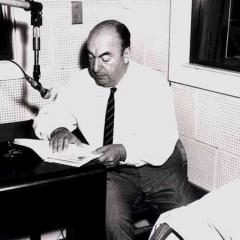
Pablo Neruda
Pablo Neruda

Pablo Neruda, full name Neftali Ricardo Reyes Basoalto, was a Chilean poet and politician who served as a Senator of Chile. Born on July 12, 1904, in Talcahuano, Chile, he passed away on September 23, 1973. Neruda is considered one of the greatest poets of the 20th century, known for his rich poetry and profound social commitment. more

You May Also Like

“The curse of mortality. You spend the first portion of your life learning, growing stronger, more capable. And then, through no fault of your own, your body begins to fail. You regress. Strong limbs become feeble, keen senses grow dull, hardy constitutions deteriorate. Beauty withers. Organs quit. You remember yourself in your prime, and wonder where that person went. As your wisdom and experience are peaking, your traitorous body becomes a prison.”

“What is this gypsy passion for separation, this readiness to rush off when we've just met? My head rests in my hands as I realize, looking into the night that no one turning over our letters has yet understood how completely and how deeply faithless we are, which is to say: how true we are to ourselves.”

“Maybe the only thing each of us can see is our own shadow. Carl Jung called this his shadow work. He said we never see others. Instead we see only aspects of ourselves that fall over them. Shadows. Projections. Our associations. The same way old painters would sit in a tiny dark room and trace the image of what stood outside a tiny window, in the bright sunlight. The camera obscura. Not the exact image, but everything reversed or upside down.”

“Be wild; that is how to clear the river. The river does not flow in polluted, we manage that. The river does not dry up, we block it. If we want to allow it its freedom, we have to allow our ideational lives to be let loose, to stream, letting anything come, initially censoring nothing. That is creative life. It is made up of divine paradox. To create one must be willing to be stone stupid, to sit upon a throne on top of a jackass and spill rubies from one’s mouth. Then the river will flow, then we can stand in the stream of it raining down.”