Quotessence
Home / Quotes / Quote by Frances Power Cobbe

Quote by Frances Power Cobbe

Work

The Duties of Women: A Course of Lectures

This book is a compilation of lectures that delve into the societal expectations and duties associated with women. It explores various aspects of women's roles, including family life, public service, and personal development. more

Author
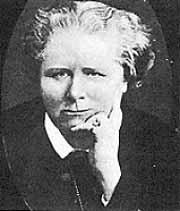
Frances Power Cobbe
Frances Power Cobbe

Frances Power Cobbe was a British writer known for her advocacy of animal rights. Born on December 4, 1822, she passed away on April 5, 1904. Cobbe was one of the pioneers of the animal rights movement, actively participating in it during the mid-19th century and becoming a leader in the field. more

You May Also Like

“It is in the faculty of noble, disinterested, unselfish love that lies the true gift and power of womanhood,--a power which makes us, not the equal of men (I never care to claim such equality), but their equivalents; more than their equivalents in a moral sense.”

“This specter of the female politician, who abandons her family to neglect for the sake of passing bills in parliament, is just as complete an illusion of the masculine brain, as the other specter whom Sydney Smith laid by a joke,--the woman who would forsake an infant for a quadratic equation.”

“A famous anecdote concerning Cuvier involves the tale of his visitation from the devil—only it was not the devil but one of his students dressed up with horns on his head and shoes shaped like cloven hooves. This frightening apparition burst into Cuvier's bedroom when he was fast asleep and claimed: 'Wake up thou man of catastrophes. I am the Devil. I have come to devour you!' Cuvier studied the apparition carefully and critically said, 'I doubt whether you can. You have horns and hooves. You eat only plants.”

“Since nothing can exist that does not fulfil the conditions which render its existence possible, the different parts each being must be co-ordinated in such a way as to render possible the existence of the being as a whole, not only in itself, but also in its relations with other beings, and the analysis of these conditions often leads to general laws which are as certain as those which are derived from calculation or from experiment.”

“State censorship presents itself as a bulwark between society and forces of subversion or moral corruption. To dismiss this account of its own motives by the state as insincere would be a mistake: it is a feature of the paranoid logic of the censoring mentality that virtue ... must be innocent, and therefore, unless protected, vulnerable to the wiles of vice.”