Quotessence
Home / Quotes / Quote by Robert Hughes

Quote by Robert Hughes

“The fact remains that America is a collective work of the imagination whose making never ends, and once that sense of collectivity and mutual respect is broken the possibilities of American-ness begin to unravel. [...] Throughout the 80s, this happened with depressing regularity on both sides of American party politics. Instead of common ground, we got demagogues. [...] Neo-conservatives who create an exaggerated bogey called multiculturalism - as though Western culture itself was ever anything but multi, living by its eclecticism, its power of successful imitation, its ability to absorb "foreign" forms and stimuli! - and pushers of political correctness who would like to see grievance elevated into automatic sanctity.”

Quote by Robert Hughes

Work

Culture of Complaint: The Fraying of America

Browse quotes and source details for this work. more

Author
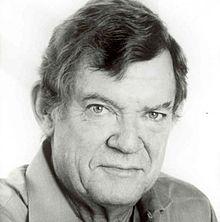
Robert Hughes
Robert Hughes

Robert Hughes (July 28, 1938 – August 6, 2012) was an Australian-born art critic, writer, and documentary filmmaker. He served as the art critic for Time magazine from 1971 to 2001, known for his sharp, passionate, and insightful commentary. Hughes authored influential books such as 'The Shock of the New,' which explored modern art history. His work often intertwined art with social and political contexts, making him one of the most prominent art critics of the 20th century. more

You May Also Like

“Good disagreements are the bedrock of communities. Good disagreements happen when people with different kinds of expertise and points of view talk and listen to one another, and when we try, honestly and pragmatically, to determine the best course of action for our whole community. Our differences make our decisions stronger. Democracy presumes that we can behave as one community, caring together for our common life, and disagreeing productively and honestly with one another. Demagoguery rejects rejects that pragmatic acceptance and even valuing of disagreement in favor of a world of certainty, purity, and silencing of dissent.”

“Demagoguery is powerfully reduced when it stops getting people elected, and that usually happens because of in-group policing. Similarly, when it isn't profitable for a media outlet to engage in demagoguery, it won't, and that happens when its target market declines to put up with it. Individual demagogues are best stopped by in-group condemnation, and particular strains of demagoguery are generally ended by public shaming.”

“Here we find, in the work of Michael Moore, a factory for making political fools out of non-political fools. As a demagogue, Moore knows we live in a democratized culture mediated by television imagery. He knows that his audience lacks the general knowledge, the critical sense, to fully understand complex events. Furthermore, the intellectual decline of our culture guarantees he will have an "intellectual" following, and this will bolster his prestige. The ability to manipulate images without regard for objective truth, without regard for his own country and how it is viewed overseas, puts Moore in the totalitarian camp - united in spirit with those who hate America and the free market. He is not troubled. Instead, he is funny. And then, he is not so funny.”

“The other argument [about the Iraq War] was about argument itself. It characterized any argument about policy (whether, in fact, Iraq did have weapons of mass destruction and whether regime change could be effected through an invasion) as unnecessary, dithering, disloyal, and possibly even deliberately evil, since the correct course of action was so obvious. Major media outlets demonized dissent. In a democracy.”

“Demagoguery is about identity. It says that complicated policy issues can be reduced to a binary of us (good) versus them (bad). It says that good people recognize there is a bad situation, and bad people don't; therefore, to determine what policy agenda is the best, it says we should think entirely in terms of who is like us and who isn't. In American politics, it becomes Republican versus Democrat or 'conservative' versus 'liberal.' That polarized and factionalized way of approaching public discourse virtually guarantees demagogues, on all sorts of issues, and in all sorts of directions. Demagoguery is a serious problem, as it undermines the ability of a community to come to reasonable policy decisions and tends to promote or justify violence, but it's rarely the consequence of an individual who magically transports a culture into a different world. Demagoguery isn't about what politicians do; it's about how we, as citizens, argue, reason, and vote. Therefore, reducing how much our culture relies on demagoguery is our problem, and up to us to solve.”

“Partisans will try to appeal to the notion that political arguments are really about which group is better in order to dismiss criticism of their group. We might think that we can refute criticism by pointing out that 'the other party does the same thing too.' But whether the other party does it too is relevant only if we're arguing about which party is better, not which policies are better.”

“Structurally, democracies succeed when there is a strong middle class, the police and the military are separate and under civilian control, due process is perceived as a 'fairness' test that applies across groups, government has to respect some kind of 'private' space into which it will not intrude UNLESS the public good is at stake, and people get mad if political figures - whether their own chosen representatives or THOSE people's representatives - appear to be untruthful or unfair. If people decide to see things as a zero-sum game - the more THEY succeed, the more WE lose, and we should rage about any call made against US, and cheer any call made against THEM - then democracy loses.”