Quotessence
Home / Quotes / Quote by Christopher Isherwood

Quote by Christopher Isherwood

“He crosses the front room, which he calls his study, and comes down the staircase. The stairs turn a corner; they are narrow and steep. You can touch both handrails with your elbows, and you have to bend your head, even if, like George, you are only five eight. This is a tightly planned little house. He often feels protected by its smallness; there is hardly room enough here to feel lonely. Nevertheless.”

Quote by Christopher Isherwood

Work

A single man

A Single Man is a deeply moving narrative that delves into the complexities of grief and the search for meaning in the aftermath of loss. The story follows George Falconer, a middle-aged English professor, as he grapples with the profound impact of his partner's death on his life. The novel is known for its introspective and lyrical prose, offering a raw and honest portrayal of the human condition in the face of tragedy. more

Author

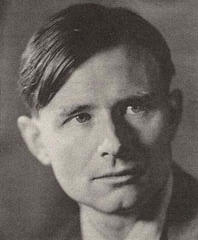
Christopher Isherwood

Christopher Isherwood is a renowned British novelist known for his profound portrayals of life in London and Berlin during the mid-20th century. His works often explore social change, personal identity, and moral dilemmas. more

You May Also Like

“Finally Exi spoke. "There are some important things to remember always, no matter how hard life presses at you. One of these things is that wherever you are, and no matter for how long, there must be a home to hold you. You cannot know who you are unless you are contained in some way that gives you shape. Otherwise you are like a small wind, or like water losing itself in sand." He paused thoughtfully, looking at us, who had all stopped to listen. "You see," he continued, "at any place or time we have no way of knowing if we will be there a day or a week. We must let our destiny come to us. In one sense this is always true. Therefore it is needful for each of us to be defined-to live, not just wait to live. Do you understand?”

“Helen's Saigon had always been about selling - chickens, information, or lovely young women, it didn't matter. It had once been called the Pearl of the Orient, but by people who had not been there in a very long time. Saigon had never been Paris, but now it was a garrison town, unlovely, a stinking refugee shantyville filled with the angry, the betrayed, the dispossessed, but she had made it her home, and she couldn't bear that soon she would have to leave.”

“Sometimes there is no choice but to walk into your own house. Far away, you think, and you do not want to see. You come home and you say do not tell me. You say, I have hunted the elk all over the snowfields of the Selway, and I do not want to know what happened here. And then there is a morning you walk in and take a look in your own house, like any traveler.”

“Auntie Zee’s room was a wondrous kaleidoscope of color: scarfs and tapestries were draped over the walls, while mobiles made of prisms dangled from the ceiling. Gold, silver, and blue pillows were piled on the bed beneath a ruby-and-emerald-colored canopy. Multicolored rugs covered the honey-colored floor. Every surface was stacked with treasures: boxes carved from seashells; tiny sculptures of creatures that shouldn’t exist, like dragons and centaurs; little paintings that hung on the wall depicting worlds with impossibly high waterfalls, many moons, and castles. Coming inside, Calisa saw one etching of the labyrinth with its bone guards. These were souvenirs of her travels. Or perhaps gifts from visiting travelers. She’d made her room a shrine to all the wonders that the nexus could bring. She loves this place.”

“To Caspian, whom I was rushing dangerously close to love with. To Nikkos, who had become an honest to goodness friend, a rarity in my life. To the sirens, especially Amara and Jacinta, whom I'd spent the most time with. To Ashana, my teacher. Even to Tanis, who complicated things but was still just as lost in this relationship as I was. And now that I had the pieces of the puzzle that had torn us apart...”

“Above all, do not lie to yourself. A man who lies to himself and listens to his own lie comes to a point where he does not discern any truth either in himself or anywhere around him, and thus falls into disrespect towards himself and others. Not respecting anyone, he ceases to love, and having no love, he gives himself up to passions and coarse pleasures in order to occupy and amuse himself, and in his vices reaches complete beastiality, and it all comes from lying continually to others and himself. A man who lies to himself is often the first to take offense. it sometimes feels very good to take offense, doesn't it? And surely he knows that no one has offended him, and that he himself has invented the offense and told lies just for the beauty of it, that he has exaggerated for the sake of effect, that he has picked up on a word and made a mountain out of a pea--he knows all of that, and still he is the first to take offense, he likes feeling offended, it gives him great pleasure, and thus he reaches the point of real hostility...”

“Cynthia drove for quite some time. Her life changed as much as she wanted, then changed even more after that. She got tired of running away from home, and all that driving didnt excite her the way it used to. Eventually, Cynthia found home in herself. Then, she found home in someone else. And then, she learned how to fall in love with staying.”