Quotessence
Home / Quotes / Quote by Fyodor Dostoevsky

Quote by Fyodor Dostoevsky

“Above all, do not lie to yourself. A man who lies to himself and listens to his own lie comes to a point where he does not discern any truth either in himself or anywhere around him, and thus falls into disrespect towards himself and others. Not respecting anyone, he ceases to love, and having no love, he gives himself up to passions and coarse pleasures in order to occupy and amuse himself, and in his vices reaches complete beastiality, and it all comes from lying continually to others and himself. A man who lies to himself is often the first to take offense. it sometimes feels very good to take offense, doesn't it? And surely he knows that no one has offended him, and that he himself has invented the offense and told lies just for the beauty of it, that he has exaggerated for the sake of effect, that he has picked up on a word and made a mountain out of a pea--he knows all of that, and still he is the first to take offense, he likes feeling offended, it gives him great pleasure, and thus he reaches the point of real hostility...”

Quote by Fyodor Dostoevsky

Work

The Brothers Karamazov

Fyodor Dostoevsky's classic work delves into the complex relationships and internal conflicts of the Karamazov siblings, examining themes of faith, doubt, and redemption. more

Author
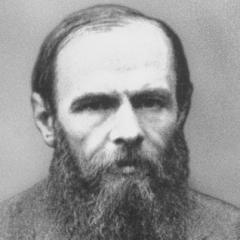
Fyodor Dostoevsky
Fyodor Dostoevsky

A renowned Russian novelist and a pioneer of psychological novels. His works deeply reveal the complexity of human nature and the injustice of society, having a profound impact on literature worldwide. more

You May Also Like

“Cynthia drove for quite some time. Her life changed as much as she wanted, then changed even more after that. She got tired of running away from home, and all that driving didnt excite her the way it used to. Eventually, Cynthia found home in herself. Then, she found home in someone else. And then, she learned how to fall in love with staying.”

“He had been in New York the whole year managing his father's winery and office in lower Manhattan, but now he'd come home by train for Christmas--and the world was wonderful. Three thousand miles was nothing, you got on a train, you had your own private little room, you changed at Chicago, you ate great meals in the diner, you read mystery stories and newspapers in the club car, and then all of a sudden there you were back in Fresno, and there everybody was, standing on the station platform waiting for you. Who could ask for anything more?”

“I open the window to let the fresh air in, to let the breeze penetrate the spaces between my ribs and take the opportunity to cleanse me from within. Sounds erupt from the outside: seagulls crying, horses neighing, and waves crashing wildly against the cliffs. The dog’s howls are drowned out by ships’ horns. For those who live in a big city, these noises might seem like evidence of stillness. Silence, for some, is synonymous with human absence, by which they refer, especially, to the lack of articulated words, the silent of tongues. But on this piece of land, every moment forms part of an instrument. Here, every whisper unfolds into a complex melody that sees you in the front row of an impromptu concert.”

“She was gracious if oddly shy with his friends when they came to visit; she listened eagerly as women spoke to her of their pregnancy and childbirth experiences, of which they were happy to speak, and at length; the Playwright heard his wife tell one of these women that her own mother had once told her she'd loved being pregnant, it's the only time a woman truly feels at home in her body, and in the world - "Is that true?" The Playwright hadn't lingered to hear the answer; he wondered what such a revelation meant, for a man. Are we never at home in our bodies? In the world? Except in the act of sexual intercourse, transmitting our seed to the female?”