“Every man feels that perception gives him an invincible belief of the existence of that which he perceives; and that this belief is not the effect of reasoning, but the immediate consequence of perception. When philosophers have wearied themselves and their readers with their speculations upon this subject, they can neither strengthen this belief, nor weaken it; nor can they shew how it is produced. It puts the philosopher and the peasant upon a level; and neither of them can give any other reason for believing his senses, than that he finds it impossible for him to do otherwise.”
Quote by Thomas Reid
Work
The Works of Thomas Reid, D. D.: Now Fully Collected, with Selections from His Unpublished Letters
The book is a scholarly compilation of Reid's extensive writings, offering insight into his philosophical thoughts and ideas. It includes his published works and selected letters that provide a deeper understanding of his intellectual development and personal reflections. more
Author
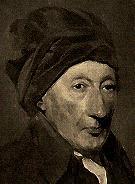
Thomas Reid
Thomas Reid (April 26, 1710 – October 7, 1796) was a Scottish philosopher and a key figure of the Scottish Enlightenment. He founded the Scottish School of Common Sense, which sought to counter David Hume's skepticism by grounding philosophy in intuitive principles of common sense. Reid studied and taught at the University of Aberdeen, later becoming Professor of Moral Philosophy at the University of Glasgow. His major works, An Inquiry into the Human Mind on the Principles of Common Sense and Essays on the Intellectual Powers of Man, argued that perception directly grasps external objects, rejecting the theory of ideas. His ideas influenced 19th-century Scottish philosophy, French spiritualism, and 20th-century analytic philosophy. more
You May Also Like
Source: Philosophical works
Source: Essays on the powers of the human mind: An essay on quantity. An analysis of Aristotl's logic
Source: Philosophical works
Source: The Works of Thomas Reid; with an Account of His Life and Writings
Source: Philosophical works
Source: Philosophical works
Source: Philosophical works
Source: The Story of My Life: Recollections and Reflections