Quotessence
Home / Quotes / Quote by Carl Jung

Quote by Carl Jung

“Even the enlightened person remains what he is, and is never more than his own limited ego before the One who dwells within him, whose form has no knowable boundaries, who encompasses him on all sides, fathomless as the abysms of the earth and vast as the sky”

Quote by Carl Jung

Work

Answer to Job

This book delves into the profound questions and themes presented in the biblical narrative of Job, examining the nature of suffering, divine justice, and human resilience. more

Author

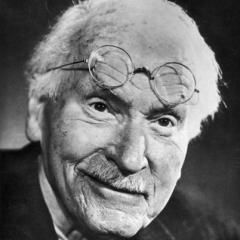
Carl Jung
Carl Jung

Carl Jung, born on July 26, 1875, and died on June 6, 1961, was a renowned Swiss psychiatrist and psychologist. His theories have had a profound impact on fields such as psychology, psychiatry, and religious studies. Jung proposed the theory of personality types, the concept of the collective unconscious, and founded analytical psychology. more

You May Also Like

“There is, how­ever, a strong empir­i­cal rea­son why we should cul­ti­vate thoughts that can never be proved. It is that they are known to be use­ful. Man pos­i­tively needs gen­eral ideas & con­vic­tions that will give a mean­ing to his life & enable him to find a place for him­self in the uni­verse. He can stand the most incred­i­ble hard­ships when he is con­vinced that they make sense; he is crushed when on top of all his mis­for­tunes, he has to admit that he is tak­ing part in a ‘tale told by an idiot.’”

“No one who, like me, conjures up the most evil of those half-tamed demons that inhabit the human breast, and seeks to wrestle with them, can expect to come through the struggle unscathed.”

“One might compare the relation of the ego to the id with that between a rider and his horse. The horse provides the locomotor energy, and the rider has the prerogative of determining the goal and of guiding the movements of his powerful mount towards it. But all too often in the relations between the ego and the id we find a picture of the less ideal situation in which the rider is obliged to guide his horse in the direction in which it itself wants to go.”