“One might compare the relation of the ego to the id with that between a rider and his horse. The horse provides the locomotor energy, and the rider has the prerogative of determining the goal and of guiding the movements of his powerful mount towards it. But all too often in the relations between the ego and the id we find a picture of the less ideal situation in which the rider is obliged to guide his horse in the direction in which it itself wants to go.”
Quote by Sigmund Freud
Author
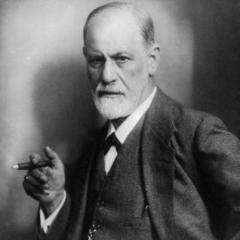
Sigmund Freud
Sigmund Freud, born on May 6, 1856, in Moravia, and died on September 23, 1939, in London, was an Austrian neurologist and the founder of psychoanalysis. Known as the father of modern psychology, Freud made significant contributions to the understanding of human psychology, introducing concepts such as the unconscious mind, dream analysis, and sexual theory. more
You May Also Like
Source: The standard edition of the complete psychological works of Sigmund Freud
“I was right to back Muhammad Ali, but it caused me major enmity in many areas of this nation.”
Source: The standard edition of the complete psychological works of Sigmund Freud
“What is characteristic of illusions is that they are derived from human wishes.”
Source: The standard edition of the complete psychological works of Sigmund Freud