“Our knowledge of the historical worth of certain religious doctrines increases our respect for them, but does not invalidate our proposal that they should cease to be put forward as the reasons for the precepts of civilization. On the contrary! Those historical residues have helped us to view religious teachings, as it were, as neurotic relics, and we may now argue that the time has probably come, as it does in an analytic treatment, for replacing the effects of repression by the results of the rational operation of the intellect.”
Quote by Sigmund Freud
Author
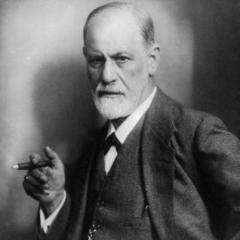
Sigmund Freud
Sigmund Freud, born on May 6, 1856, in Moravia, and died on September 23, 1939, in London, was an Austrian neurologist and the founder of psychoanalysis. Known as the father of modern psychology, Freud made significant contributions to the understanding of human psychology, introducing concepts such as the unconscious mind, dream analysis, and sexual theory. more
You May Also Like
“I was right to back Muhammad Ali, but it caused me major enmity in many areas of this nation.”
Source: The standard edition of the complete psychological works of Sigmund Freud
“What is characteristic of illusions is that they are derived from human wishes.”
Source: The standard edition of the complete psychological works of Sigmund Freud