“Living things have no inertia, and tend to no equilibrium.”
Quote by Thomas Huxley
Work
Lay Sermons, Addresses, and Reviews
This book compiles a variety of religious sermons, public addresses, and literary reviews, offering insights into the author's perspectives on faith, society, and literature. more
Author
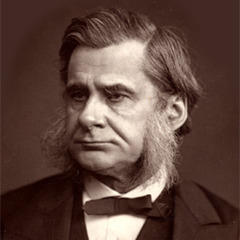
Thomas Huxley
Thomas Huxley, a British biologist, was a staunch supporter of Darwin's theory of evolution. Renowned for his research in comparative anatomy, embryology, paleontology, and philosophy, Huxley made significant contributions to the field of biology. He had a profound influence on science, not only through his support of Darwin's theory of evolution but also through his role as a science popularizer and advocate for science education. more
You May Also Like
“Men will not be content to manufacture life: they will want to improve on it.”
Source: Scientific Papers: Physics, Chemistry, Astronomy, Geology
“Stones grow, plants grow, and live, animals grow live and feel.”
Source: The origin of life
“The gene as the basis of life.”
Source: Man's Place in Living Nature