Quotessence
Home / Quotes / Quote by Ernest Hemingway

Quote by Ernest Hemingway

Work

The Old Man and the Sea

This renowned work delves into the life of an elderly fisherman who, despite his age and numerous setbacks, embarks on a perilous journey to catch a giant marlin. The narrative is a profound reflection on the human condition, the struggle against nature, and the enduring power of hope. more

Author
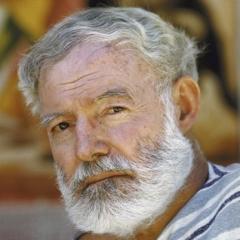
Ernest Hemingway
Ernest Hemingway

American author known for his concise and forceful writing style, as well as his profound insights into life. Hemingway's works cover a wide range of themes including war, adventure, and love, with notable titles such as 'The Old Man and the Sea' and 'A Farewell to Arms'. more

You May Also Like

“Impossible, I realize, to enter another’s solitude. If it is true that we can ever come to know another human being, even to a small degree, it is only to the extent that he is willing to make himself known. A man will say: I am cold. Or else he will say nothing, and we will see him shivering. Either way, we will know that he is cold. But what of the man who says nothing and does not shiver? Where all is intractable, here all is hermetic and evasive, one can do no more than observe. But whether one can make sense of what he observes is another matter entirely”

“For a man who finds life tolerable only by staying on the surface of himself, it is natural to be satisfied with offering no more than his surface to others. There are few demands to be met, and no commitment is required. Marriage, on the other hand, closes the door. Your existence is confined to a narrow space in which you are constantly forced to reveal yourself – and therefore, constantly obliged to look into yourself, to examine your own depths.”

“There is nothing more terrible, I learned, than having to face the objects of a dead man. Things are inert: that have meaning only in function of the life that makes use of them. When that life ends, the things change, even though they remain the same. […] they say something to us, standing there not as objects but as remnants of thought, of consciousness, emblems of the solitude in which a man comes to make decisions about himself.”