Quotessence
Home / Quotes / Quote by Isaac Asimov

Quote by Isaac Asimov

Work

The Robot Collection: The Robot Novels

This collection brings together a series of robot-themed novels, each delving into different facets of robotics and artificial intelligence. The stories may range from futuristic adventures to philosophical inquiries into the nature of consciousness and the relationship between humans and machines. more

Author
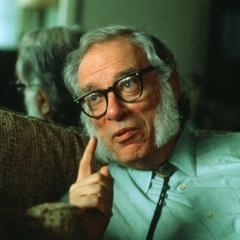
Isaac Asimov
Isaac Asimov

Isaac Asimov, born on January 2, 1920 in Poland and died on April 6, 1992 in the United States, was a renowned American science fiction author, science writer, and literary critic, known as the 'Father of Science Fiction'. His works covered a wide range of science fiction themes, including robots, space exploration, and time travel, and had a profound impact on science fiction literature and the popularization of science. more

You May Also Like

“Impossible, I realize, to enter another’s solitude. If it is true that we can ever come to know another human being, even to a small degree, it is only to the extent that he is willing to make himself known. A man will say: I am cold. Or else he will say nothing, and we will see him shivering. Either way, we will know that he is cold. But what of the man who says nothing and does not shiver? Where all is intractable, here all is hermetic and evasive, one can do no more than observe. But whether one can make sense of what he observes is another matter entirely”

“For a man who finds life tolerable only by staying on the surface of himself, it is natural to be satisfied with offering no more than his surface to others. There are few demands to be met, and no commitment is required. Marriage, on the other hand, closes the door. Your existence is confined to a narrow space in which you are constantly forced to reveal yourself – and therefore, constantly obliged to look into yourself, to examine your own depths.”

“There is nothing more terrible, I learned, than having to face the objects of a dead man. Things are inert: that have meaning only in function of the life that makes use of them. When that life ends, the things change, even though they remain the same. […] they say something to us, standing there not as objects but as remnants of thought, of consciousness, emblems of the solitude in which a man comes to make decisions about himself.”

“Almost halfway down the aisle, she saw someone she wasn't expecting, and she almost stumbled on her satin heels. Kingsley Martin stood at the end of a pew, his arms crossed. He was wearing a tuxedo as well. Just like any other guest. What was he doing here? He was supposed to be in Paris! He was supposed to be gone! He looked directly at Mimi. She heard his voice loud and clear in her head. Leave him. Why should I? What do you promise me? Nothing. And everything. A life of danger and adventure. A chance to be yourself. Leave him. Come with me.”

“In order to arouse sympathy, the aristocracy was obliged to lose sight, apparently, of its own interests, and to formulate its indictment against the bourgeoisie in the interest of the exploited working class alone. Thus, the aristocracy took their revenge by singing lampoons on their new masters and whispering in his ears sinister prophesies of coming catastrophe.”