Quotessence
Home / Quotes / Quote by Irving Kristol

Quote by Irving Kristol

Work

Neoconservatism: The Autobiography of an Idea

This book delves into the historical and philosophical roots of neoconservatism, tracing its evolution from its inception to its current influence on global politics. more

Author
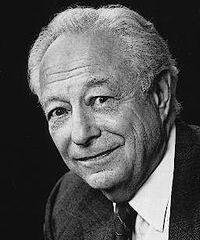
Irving Kristol
Irving Kristol

Irving Kristol was a prominent American political journalist and intellectual, born on January 22, 1920, and died on September 18, 2009. Renowned for his role as a columnist, Kristol significantly influenced conservative thought in the United States. more

You May Also Like

“For Dicey, writing in 1885, and for me reading him some seventy years later, the rule of law still had a very English, or at least Anglo-Saxon, feel to it. It was later, through Hayek's masterpieces "The Constitution of Liberty" and "Law, Legislation and Liberty" that I really came to think this principle as having wider application.”

“I was 25 years old and pursuing my doctorate in economics when I was allowed to spend six months of postgraduate studies in Naples, Italy. I read the Western economic textbooks and also the more general work of people like Hayek. By the time I returned to Czechoslovakia, I had an understanding of the principles of the market. In 1968, I was glad at the political liberalism of the Dubcek Prague Spring, but I was very critical of the Third Way they pursued in economics.”

“There is no figure who had more of an influence, no person had more of an influence on the intellectuals behind the Iron Curtain than Friedrich Hayek. His books were translated and published by the underground and black market editions, read widely, and undoubtedly influenced the climate of opinion that ultimately brought about the collapse of the Soviet Union.”

“If one writing contributed more than any other to the framework in which this work Sowell's Knowledge and Decisions developed, it would be an essay entitled 'The Use of Knowledge in Society,' published in the American Economic Review of September 1945, and written by F. A. Hayek . . In this plain and apparently simple essay was a deeply penetrating insight into the way societies function and malfunction, and clues as to why they are so often and so profoundly misunderstood.”