Quotessence
Home / Quotes / Quote by Rafael Sabatini

Quote by Rafael Sabatini

“He questioned now his heresy on the score of sin. It was possible that, after all, the theologians might be right. Whether sin and evil were convertible terms he could not be sure. But not only was he quite sure that there was no lack of evil in the world; he actually began to wonder if evil were not the positive force that fashions the destinies of men, whilst good is but a form of resistance which, however strong, remains passive, or else, when active, commonly operates through evil that it may ultimately prevail.”

Quote by Rafael Sabatini

Work

Bellarion

Browse quotes and source details for this work. more

Author

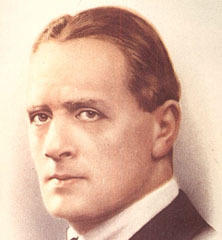
Rafael Sabatini
Rafael Sabatini

Rafael Sabatini (April 29, 1875 – February 13, 1950) was an Italian-born British writer known for his historical adventure novels. His most famous works include 'Captain Blood', 'The Sea Hawk', and 'Spartacus'. Born in Italy to an English mother and Italian father, he was multilingual and later settled in England to pursue writing. His novels often set in 17th and 18th century Europe, blending romance and adventure. Sabatini's works were adapted into films and TV series, influencing the historical adventure genre. He wrote over 40 novels and short story collections, earning the title 'Master of Historical Adventure'. His legacy endures among fans of classic adventure literature. more

You May Also Like

“For [Iris] Murdoch, the essential immoral act is the inability to see other people correctly. Human beings, she finds, are self-centered beings, anxiety-ridden and resentful. We are constantly representing people to ourselves in self-serving ways, in ways that gratify our egos and serve our ends. We stereotype and condescend, ignore and dehumanize. And because we don’t see people accurately, we treat them wrongly. Evil happens when people are unseeing, when they don’t recognize the personhood in other human beings.”

“Something began to say to me, "He who passively accepts evil is as much involved in it as he who helps to perpetrate it. He who accepts evil without protesting against it is really coöperating with it." When oppressed people willingly accept their oppression they only serve to give the oppressor a convenient justification for his acts. Often the oppressor goes along unaware of the evil involved in his oppression so long as the oppressed accepts it. So in order to be true to one's conscience and true to God, a righteous man has no alternative but to refuse to coöperate with an evil system.”

“Like most of the students of Crozer [Theological Seminary], I felt that while war could never be a positive or absolute good, it could serve as a negative good in the sense of preventing the spread and growth of an evil force. War, horrible as it is, might be preferable to surrender to a totalitarian system—Nazi, Fascist, or Communist.”