Quotessence
Home / Quotes / Quote by D. H. Lawrence

Quote by D. H. Lawrence

Work

Delphi Complete Works of D.H. Lawrence (Illustrated)

The Delphi Complete Works of D.H. Lawrence (Illustrated) is a meticulously curated compilation of the renowned author's literary output. This collection offers readers a comprehensive view of Lawrence's writing, accompanied by illustrative elements that enrich the narrative. It includes novels, short stories, poetry, and essays, showcasing the breadth of Lawrence's literary achievements. more

Author
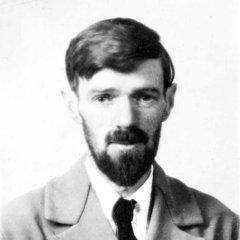
D. H. Lawrence
D. H. Lawrence

D. H. Lawrence was an English novelist and poet, born on September 11, 1885, and died on March 2, 1930. He is recognized for his distinctive prose style and his exploration of complex human relationships, particularly in the context of modernity and industrialization. His works often deal with themes of love, sex, and the struggle for individuality. more

You May Also Like

“One side of service is serving, but the other side is creating the space in oneself where the possibilities of giving one's best become feasible. If you let go of your own compulsion and greed the things you are conditioned into by your culture then the more archetypal, more universally valid, more human, more compassionate, wiser activities and thoughts can come to your mind and you can dedicate yourself to them more fully.”

“As Colin Wilson has written, "modern civilisation, with its mechanised rigidity is producing more outsiders than ever before-people who are too intelligent to do some repetitive job, but not intelligent enough to make their own terms with society." Those "intelligent enough" to make their own terms with society are what we will later refer to as artists of life. The outsider views himself as a product of a culture he rejects-the artist views himself as a culture-builder.”

“Life and work are not things apart. Work is more than gaining privileges and possessions; it is ongoing, ecstatic, LIVING experience. When we tap into living experience, we no longer feel as though we must be king. We can just be ALIVE at work! When we live in the bliss, there is no difficulty which is insurmountable. If we miss the bliss, there is no compensation which is adequate.”

“Here we must distinguish between society and culture. A society can be interested in a man or woman only as a political or economic entity; a culture is interested in more. Culture means literally "to cultivate" or "to care for." Cultures care for their peoples as natural, spiritual beings and not simply as workers or consumers.”

“To ask for overt renunciation of a cherished doctrine is to expect too much of human nature. Men do not repudiate the doctrines and dogmas to which they have sworn their loyalty. Instead they rationalize, revise, and re-interpret them to meet new needs and new circumstances, all the while protesting that their heresy is the purest orthodoxy.”