“When men exercise their reason coolly and freely, on a variety of distinct questions, they inevitably fall into different opinions, on some of them. When they are governed by a common passion, their opinions if they are so to be called, will be the same.”
Quote by James Madison
Work
The Federalist, on the New Constitution, Written in the Year 1788
Composed by Alexander Hamilton, James Madison, and John Jay, this collection of essays advocates for the ratification of the U.S. Constitution, offering insights into the structure and function of the federal government. more
Author
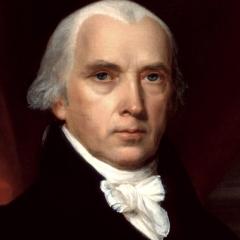
James Madison
James Madison, the 4th President of the United States, was born on March 16, 1751, and died on June 28, 1836. He was a key figure in drafting the U.S. Constitution and had a profound impact on the political system of the United States. more
You May Also Like
Source: The Essential Federalist: A New Reading of the Federalist Papers
“Those who have a tolerable knowledge of human nature will not stand in need of such lights.”
Source: The Federalist, on the New Constitution, Written in the Year 1788
Source: The Political Writings of John Dickinson, Esquire: Late President of the State of Delaware, and of the Commonwealth of Pennsylvania
Source: The writings of Thomas Jefferson: being his autobiography, correspondence, reports, messages, addresses, and other writings, official and private : published by the order of the Joint Committee of Congress on the Library, from the original manuscripts, deposited in the Department of State
Source: Memoir, correspondence, and miscellanies from the papers of T. Jefferson
Source: The Federalist: With Letters of Brutus
Source: The Federalist, on the New Constitution, Written in the Year 1788
Source: The Essential Federalist: A New Reading of the Federalist Papers