Quotessence
Home / Quotes / Quote by Salman Rushdie

Quote by Salman Rushdie

“The most obvious inspiration to be brave is that we all feel it: you can't have free expression right now in a very wide range of countries. It takes a lot of guts for writers and journalists in those countries to stand up against repression and do what they do. Russia is a case in point where, as you know, journalists have an embarrassing habit of being killed for their reporting.”

Quote by Salman Rushdie

Author
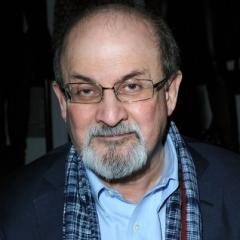
Salman Rushdie
Salman Rushdie

Salman Rushdie (born June 19, 1947) is a British-Indian novelist and essayist. Known for his magical realism style, his novel Midnight's Children won the Booker Prize in 1981. His works often explore themes of cultural conflict, religion, and politics. In 1988, his novel The Satanic Verses sparked global controversy, leading to a fatwa issued by Iran's Ayatollah Khomeini calling for his assassination. Rushdie spent years in hiding under police protection. He remains a prominent voice in contemporary English literature, celebrated for his literary innovation and defense of free expression. more

You May Also Like

“Vulnerability of artists is definitely what makes organizations like PEN necessary because, as I tried to argue, the actual work that writers and artists do has an ornery way of surviving. Particularly in this age of the internet, it is very easy for forbidden work to be found online somewhere if you know where to look. Artists themselves, however, are in increasing danger, and not just artists. The great concern is that year after year, rising numbers of journalists are being killed in pursuit of their work.”

“I suppose authoritarians don't like being made fun of because authoritarian rulers have a very inflated sense of themselves and don't like being deflated, which makes it all the more important to continue to deflate them. These are very courageous people around the world who poke fun from inside these societies. So, we now have to broaden the definition of what we mean by "writer" to include bloggers, cartoonists, song writers, visual artists - all these people are, in different ways, quite brave.”

“I have a general feeling that writers and artists who are in this peculiar situation, of being a persecuted artist, all anyone ever asks about is the persecution. It may well be that's the last thing in the world they want to talk about. There were many years in which every journalist in the world wanted to talk to me, but nobody wanted to talk to me about my work. That felt deeply frustrating because I felt there was an attempt to stifle me as an artist. The best revenge I could have was to write.”

“There's no point going to a country which is torturing people to ask them to stop if they can point out that the United States is doing it too. It enormously weakens the argument. Back in the early days of the Bush administration, PEN made a decision that we would try and make human rights issues and civil rights issues in this country part of the priority, and not just international issues, which had more or less been the priority up until then.”

“History will have to record that the greatest tragedy of this period of social transition was not the strident clamor of the bad people, but the appalling silence of the good people.”

“The desire for story is very, very deep in human beings. We are the only creature in the world that does this; we are the only creature that tells stories, and sometimes those are true stories and sometimes those are made up stories. Then there are the larger stories, the grand narratives that we live in, which are things like nation and family and clan and so on. Those stories are considered to be treated reverentially. They need to be part of the way in which we conduct the discourse of our lives and to prevent people from doing something very damaging to human nature.”