Quotessence
Home / Quotes / Quote by Justus von Liebig

Quote by Justus von Liebig

Work

The Development of Chemistry, 1789-1914: Familiar letters on chemistry

This book offers a historical perspective on the field of chemistry through a series of correspondence, highlighting key developments and figures from the period 1789 to 1914. more

Author
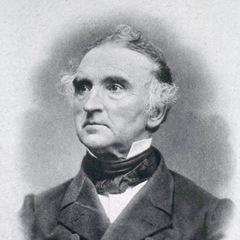
Justus von Liebig
Justus von Liebig

Justus von Liebig, a German chemist born on May 12, 1803, and died on April 18, 1873, is considered one of the founders of organic chemistry. He made significant contributions to the development of agricultural chemistry and food science. more

You May Also Like

“To eliminate the discrepancy between men's plans and the results achieved, a new approach is necessary. Morphological thinking suggests that this new approach cannot be realized through increased teaching of specialized knowledge. This morphological analysis suggests that the essential fact has been overlooked that every human is potentially a genius. Education and dissemination of knowledge must assume a form which allows each student to absorb whatever develops his own genius, lest he become frustrated. The same outlook applies to the genius of the peoples as a whole.”

“We cannot conceive how the Foetus is form'd in the Womb, nor as much as how a Plant springs from the Earth we tread on ... And if we are ignorant of the most obvious things about us, and the most considerable within our selves, 'tis then no wonder that we know not the constitution and powers of the creatures, to whom we are such strangers.”

“In a sense Shapley's telling me that space was transparent, which I shouldn't have believed, illustrates a fundamental problem in science, believing what people tell you. Go and find it out for yourself. That same error has persisted in my life and in many other people's. Authorities are not always authorities on everything; they often cling to their own mistakes.”

“What struck me most in England was the perception that only those works which have a practical tendency awake attention and command respect, while the purely scientific, which possess far greater merit are almost unknown. And yet the latter are the proper source from which the others flow. Practice alone can never lead to the discovery of a truth or a principle. In Germany it is quite the contrary. Here in the eyes of scientific men no value, or at least but a trifling one, is placed upon the practical results. The enrichment of science is alone considered worthy attention.”