Quotessence
Home / Quotes / Quote by Steven Heller

Quote by Steven Heller

Author

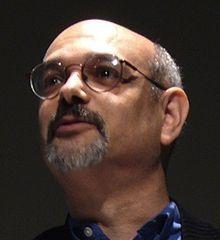
Steven Heller
Steven Heller

Steven Heller, born on July 7, 1950, is an accomplished art director with a career spanning advertising, design, editing, and teaching. Known for his unique visual style and profound understanding of design, he has made significant contributions to the field. more

You May Also Like

“An old essay by John Updike begins, 'We live in an era of gratuitous inventions and negative improvements.' That language is general and abstract, near the top of the ladder. It provokes our thinking, but what concrete evidence leads Updike to his conclusion ? The answer is in his second sentence : 'Consider the beer can.' To be even more specific, Updike was complaining that the invention of the pop-top ruined the aesthetic experience of drinking beer. 'Pop-top' and 'beer' are at the bottom of the ladder, 'aesthetic experience' at the top.”

“It is important to notice that these badly functioning designs were praised for 'elegance.' But elegance as theoretical scientists apply it is quite different. The elegance of a mathematical formula is that it explains a phenomenon beautifully, with no parts left over. In design, elegance is more readily perceived as a property of product than of process. If we had more elegant theories, we might look to design for more than elegance.”

“A great emotion is too selfish ; it takes into itself all the blood of the spirit, and the congestion leaves the hands too cold to write. Three sorts of emotion produce great poetry - strong but quick emotions, seized upon for art as soon as they have passed, but not before they have passed ; strong and deep emotions in their remembrance along time after ; and false emotions, that is to say, emotions felt in the intellect. Not insincerity, but a translated sincerity, is the basis of all art.”

“Being smart in the arts is the same as being smart in engineering is the same as being smart in writing is the same as being smart in anything, really. It's the ability to manipulate all the pieces of the puzzle in your mind, try to fit them together, and when they don't fit quite right... you sand the edges/corners and make them all fit.”

“When I first prepared this particular talk... I realized that my usual approach is usually critical. That is, a lot of the things that I do, that most people do, are because they hate something somebody else has done, or they hate that something hasn't been done. And I realized that informed criticism has completely been done in by the web. Because the web has produced so much uninformed criticism. It's kind of a Gresham's Law-bad money drives the good money out of circulation. Bad criticism drives good criticism out of circulation. You just can't criticize anything.”