Quotessence
Home / Quotes / Quote by Baron de Montesquieu

Quote by Baron de Montesquieu

“The false notion of miracles comes of our vanity, which makes us believe we are important enough for the Supreme Being to upset nature on our behalf.”

Quote by Baron de Montesquieu

Author
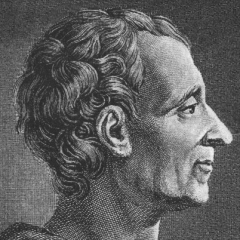
Baron de Montesquieu

Baron de Montesquieu, a French Enlightenment thinker, jurist, historian, and politician, was born on January 18, 1689, and died on February 10, 1755. He is one of the most important thinkers in the history of Western political thought, known for his contributions to the theory of the separation of powers. more

You May Also Like

“It is no defense of superstition and pseudoscience to say that it brings solace and comfort to people. . . . If solace and comfort are how we judge the worth of something, then consider that tobacco brings solace and comfort to smokers; alcohol brings it to drinkers; drugs of all kinds bring it to addicts; the fall of cards and the run of horses bring it to gamblers; cruelty and violence bring it to sociopaths. Judge by solace and comfort only and there is no behavior we ought to interfere with.”

“As for those who protest that I am robbing people of the great comfort and consolation they gain from Christianity, I can only say that Christianity includes hell, eternal torture for the vast majority of humanity, for most of your relatives and friends. . . . If I could feel that I had robbed anybody of his faith in hell, I should not be ashamed or regretful.”

“The old doctrine that God wanted man to do something for him, and that he kept a watchful eye upon all the children of men; that he rewarded the virtuous and punished the wicked, is gradually fading from the mind. We know that some of the worst men have what the world calls success. We know that some of the best men lie upon the straw of failure. We know that honesty goes hungry, while larceny sits at the banquet. We know that the vicious have every physical comfort, while the virtuous are often clad in rags.”

“The world in which we live can be understood as a result of muddle and accident; but if it is the outcome of deliberate purpose, the purpose must have been that of a fiend. For my part, I find accident a less painful and more plausible hypothesis.”