Quotessence
Home / Quotes / Quote by Franz Kafka

Quote by Franz Kafka

“He thought back on his family with deep emotion and love. His conviction that he would have to disappear was, if possible, even firmer than his sister's. He remained in this state of empty and peaceful reflection until the tower clock struck three in the morning. He still saw that outside the window everything was beginning to grow light. Then, without his consent, his head sank down to the floor, and from his nostrils streamed his last weak breath.”

Quote by Franz Kafka

Work

The Metamorphosis

Franz Kafka's 'The Metamorphosis' is a novella that delves into the psychological and social impact of sudden and extreme transformation. The narrative follows Gregor Samsa, a traveling salesman, who wakes up one morning to find himself transformed into a monstrous insect. The story examines the struggle for identity and the alienation experienced by Gregor in a world that cannot comprehend his metamorphosis. Kafka's work is renowned for its complex and haunting portrayal of the human condition, often reflecting the anxieties and existential concerns of modern life. more

Author

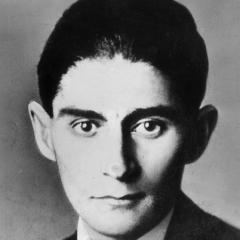
Franz Kafka
Franz Kafka

Franz Kafka (July 3, 1883 - June 3, 1924) was an important German-language novelist of the 20th century, known for his unique literary style and profound philosophical thoughts. His works, often themed around loneliness, alienation, and existentialism, have had a profound impact on literature and philosophy. more

You May Also Like

“The decor bowled me over. Everywhere I looked, there was something more to see. Botanical prints, a cross section of pomegranates, a passionflower vine and its fruit. Stacks of thick books on art and design and a collection of glass paperweights filled the coffee table. It was enormously beautiful, a sensibility I'd never encountered anywhere, a relaxed luxury. I could feel my mother's contemptuous gaze falling on the cluttered surfaces, but I was tired of three white flowers in a glass vase. There was more to life than that.”

“I imagined Kandinsky's mind, spread out all over the world, and then gathered together. Everyone having only a piece of the puzzle. Only in a show like this could you see the complete picture, stack the pieces up, hold them to the light, see how it all fit together. It made me hopeful, like someday my life would make sense too, if I could just hold all the pieces together at the same time.”