Quotessence
Home / Quotes / Quote by Sivananda

Quote by Sivananda

Author

Sivananda
Sivananda

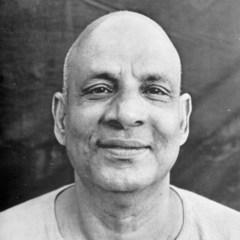
Swami Sivananda (September 8, 1887 – July 14, 1963) was a renowned Indian spiritual leader, yoga master, and prolific author. Originally named Kuppuswami, he was a physician before renouncing worldly life to become a monk. In 1936, he founded the Divine Life Society in Rishikesh, India, dedicated to spreading yoga and Vedanta philosophy worldwide. He authored over 200 books on yoga, meditation, and spiritual practice, profoundly influencing the global yoga movement. His teachings emphasized the integration of various yoga paths, promoting holistic development of body, mind, and spirit. more

You May Also Like

“Ego's trick is to make us lose sight of our interdependence. That kind of ego-thought gives us a perfect justification to look out only for ourselves. But that is far from the truth. In reality we all depend on each other and we have to help each other. The husband has to help his wife, the wife has to help the husband, the mother has to help her children, and the children are supposed to help the parents too, whether they want to or not.”

“The more successful you become, the more the demands of your ego will increase. In the beginning, you simply want to succeed, but your ego will not be satisfied. When you become a little more successful your ego wants to kill your competition. And when you become even more successful, it wants to make you the universal king. There's no telling what ego wants because our desire doesn't have any limit; therefore, its demands continually increase.”

“All that the posture of skepticism accomplishes is to freeze the ego in an ignorantist poverty that never stretches or diversifies its resources of imagination or understanding. Any uncultured cretin can close his eyes and try to reduce the issues down to linear simplisms and say, "I am doubting, I am proving my magisterial or sovereign control over my own mind." Doubt is a useful and significant test of one's critical powers, but by itself it bears little if any significant cultural charge of enlightenment or satori; indeed it is the very opposite kind of thing.”