Quotessence
Home / Quotes / Quote by Ernest Hemingway

Quote by Ernest Hemingway

“It is by riding a bicycle that you learn the contours of a country best, since you have to sweat up the hills and coast down them. Thus you remember them as they actually are, while in a motor car only a high hill impresses you, and you have no such accurate remembrance of the country you have driven through as you gain by riding a bicycle.”

Quote by Ernest Hemingway

Author
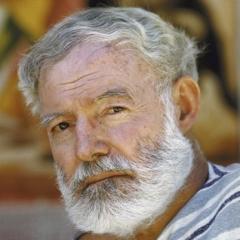
Ernest Hemingway
Ernest Hemingway

American author known for his concise and forceful writing style, as well as his profound insights into life. Hemingway's works cover a wide range of themes including war, adventure, and love, with notable titles such as 'The Old Man and the Sea' and 'A Farewell to Arms'. more

You May Also Like

“I'm fascinated by the sprinters. They suffer so much during the race just to get to the finish, they hang on for dear life in the climbs, but then in the final kilometers they are transformed and do amazing things. It's not their force per se that impresses me, but rather the renaissance they experience. Seeing them suffer throughout the race only to be reborn in the final is something for fascination.”

“Honesty is a principle, and we have our moral agency to determine how we will apply this principle. We have the agency to make choices, but ultimately we will be accountable for each choice we make. We may deceive others, but there is One we will never deceive. From the Book of Mormon we learn, "The keeper of the gate is the Holy One of Israel; and he employeth no servant there; and there is none other way save it be by the gate; for he cannot be deceived, for the Lord God is his name." [2 Nephi 9:41]”

“I suffer whenever I see that common sight of a parent or senior imposing his opinion and way of thinking and being on a young soul to which they are totally unfit. Cannot we let people be themselves, and enjoy life in their own way? You are trying to make that man another you. One's enough.”

“From the moment of birth, when the Stone-Age baby confronts the twentieth-century mother, the baby is subjected to these forces of violence called love, as its father and mother and their parents and their parents before them, have been. These forces are mainly concerned with destroying most of its potential.”