“Whilst the last members were signing it Doctr. Franklin looking towards the Presidents chair, at the back of which a rising sun happened to be painted, observed to a few members near him, that Painters had found it difficult to distinguish in their art a rising from a setting sun.”
Quote by James Madison
Work
The Constitutional Convention: A Narrative History from the Notes of James Madison
This book provides a detailed narrative of the Constitutional Convention, offering insights into the debates and decisions that shaped the foundational document of the United States. Authored by James Madison, one of the key figures in the convention, the book offers a firsthand perspective on the process of creating the Constitution. more
Author
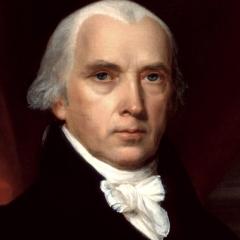
James Madison
James Madison, the 4th President of the United States, was born on March 16, 1751, and died on June 28, 1836. He was a key figure in drafting the U.S. Constitution and had a profound impact on the political system of the United States. more
You May Also Like
“'Tis done. We have become a nation.”
Source: Letters
Source: The Federalist, on the New Constitution, Written in the Year 1788
“[The Federal Convention] is really an assembly of demigods.”
Source: The Writings of George Washington: Being His Correspondence, Addresses, Messages, and Other Papers, Official and Private, Selected and Published from the Original Manuscripts; with a Life of the Author, Notes, and Illustrations
Source: The Essential Federalist: A New Reading of the Federalist Papers
Source: Memoir, correspondence, and miscellanies from the papers of T. Jefferson
Source: The Writings of Thomas Jefferson: Miscellaneous: 4. Parliamentary manual; 5. The anas; 6. Miscellaneous papers
Source: The writings of Thomas Jefferson: being his autobiography, correspondence, reports, messages, addresses, and other writings, official and private
Source: Commentaries on the Constitution of the United States: With a Preliminary Review of the Constitutional History of the Colonies and States, Before the Adoption of the Constitution