Quotessence
Home / Quotes / Quote by Alfred Dreyfus

Quote by Alfred Dreyfus

“. . . to educate children is not merely to provide for their material, or even their intellectual life, but to assure them of the sympathy of their parents, to inspire them with confidence and the certainty that there is always one place where they can unburden their hearts and forget their pains and sorrows, trivial though these may ofttimes appear to us.”

Quote by Alfred Dreyfus

Work

Five Years of My Life, 1894-1899

Browse quotes and source details for this work. more

Author
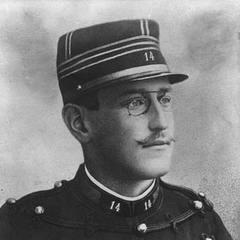
Alfred Dreyfus
Alfred Dreyfus

Alfred Dreyfus, born on October 9, 1859, and died on July 12, 1935, was a French naval officer. He is best known for the Dreyfus Affair, a major political scandal in French history during the late 19th and early 20th centuries. Dreyfus was falsely accused of espionage and was convicted, sparking widespread public outrage and controversy. more

You May Also Like

“People’s problems are like onions—they come in layers. Only after the outside layers are peeled off do they get down to the core problem. Sometimes people know what the real problem is but are afraid to start there; more often they are not even aware of what is underneath. When a person starts out talking to you about some bothersome problem, you generally hear only the ‘presenting problem.’ Active Listening effectively facilitates the helpee to move through the presenting problem and finally get down to the core problem.”

“It’s easy to be judgmental about crime when you live in a world wealthy enough to be removed from it. But the hood taught me that everyone has different notions of right and wrong, different definitions of what constitutes crime, and what level of crime they’re willing to participate in. If a crackhead comes through and he’s got a crate of Corn Flakes boxes he’s stolen out of the back of a supermarket, the poor mom isn’t thinking, I’m aiding and abetting a criminal by buying these Corn Flakes. No. She’s thinking, My family needs food and this guy has Corn Flakes”

“ACTIVE LISTENING OBVIOUSLY REQUIRES THE RECEIVER TO SUSPEND HIS OWN THOUGHTS AND FEELINGS IN ORDER TO ATTEND EXCLUSIVELY TO THE MESSAGE OF THE CHILD. IT FORCES ACCURATE RECEIVING; IF THE PARENT IS TO UNDERSTAND THE MESSAGE IN TERMS OF THE CHILD’S MEANING, HE MUST PUT HIMSELF INTO THE CHILD’S SHOES (INTO HIS FRAME OF REFERENCE, INTO HIS WORLD OF REALITY), AND HE CAN THEN HEAR THE MEANING INTENDED BY THE SENDER. THE “FEEDBACK” PART OF ACTIVE LISTENING IS NOTHING MORE THAN THE PARENT’S ULTIMATE CHECK ON THE ACCURACY OF HIS LISTENING, ALTHOUGH IT ALSO ASSURES THE SENDER (CHILD) THAT HE HAS BEEN UNDERSTOOD WHEN HE HEARS HIS OWN “MESSAGE” FED BACK TO HIM ACCURATELY.”

“Active Listening facilitates problem-solving by the child. We know that people do a better job of thinking a problem through and toward a solution when they can “talk it out” as opposed to merely thinking about it. Because Active Listening is so effective in facilitating talking, it helps a person in his search for solutions to his problems. Everybody had heard such expressions as “Let me use you as a sounding board” or “I’d like to kick this problem around with you” or “Maybe it would help me to talk it out with you.”