Quotessence
Home / Quotes / Quote by Celia Thaxter

Quote by Celia Thaxter

Work

An Island Garden

This book offers a series of reflective pieces that delve into the unique aspects of gardening in an island environment, including the flora, fauna, and cultural significance of island gardens. more
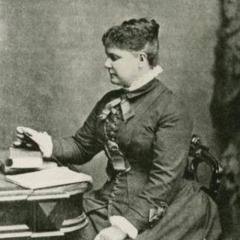
Author

Celia Thaxter
Celia Thaxter

Celia Thaxter was an American writer known for her poetry and prose. Born on June 29, 1835, in Portsmouth, New Hampshire, she spent much of her life on the Isles of Shoals, a group of islands off the coast of Maine. Her work often reflected her close connection to nature and her experiences in the islands. Thaxter's writing career began with her poetry, which was published in various magazines and journals. She later expanded her repertoire to include novels and short stories. Her most famous work is 'The Gables,' a novel that offers a vivid portrayal of island life. Thaxter passed away on August 25, 1894. more

You May Also Like

“We have moments of such clarity, of such appreciation of the incredible web of interconnected events that carry us from breath to breath, day to day, as long as we live-and the next moment we fret about how much we weigh. Or who we didn't send a Valentine. Or who forgot to compliment the dinner. Or whatever.”

“When I was six or seven years old, growing up in Pittsburgh, I used to take a precious penny of my own and hide it for someone else to find. I was greatly excited at the thought of the first lucky passerby who would receive a gift in this way, regardless of merit, a free gift from the universe. . . . I've been thinking about seeing. There are lots of things to see, unwrapped gifts and free surprises. The world is fairly studded and strewn with pennies cast broadside from a generous hand.”

“Most of us lead far more meaningful lives than we know. Often finding meaning is not about doing things differently; it is about seeing familiar things in new ways. When we find new eyes, the unsuspected blessing in work we have done for many years may take us completely by surprise. We can see life in many ways: with the eye, with the mind, with the intuition. But perhaps it is only those who speak the language of meaning, who have remembered how to see with the heart, that life is ever deeply known or served.”

“Somebody was saying to Picasso that he ought to make pictures of things the way they are-objective pictures. He mumbled that he wasn't quite sure what that would be. The person who was bullying him produced a photograph of his wife from his wallet and said, "There, you see, that is a picture of how she really is." Picasso looked at it and said, "She is rather small, isn't she? And flat?"”