“A man should carry nature in his head.”
Quote by Ralph Waldo Emerson
Work
The Later Lectures of Ralph Waldo Emerson, 1843-1871
This book compiles a series of lectures given by the American philosopher and essayist Ralph Waldo Emerson over a period of nearly three decades. The lectures cover a range of topics including philosophy, spirituality, and the nature of the self. more
Author
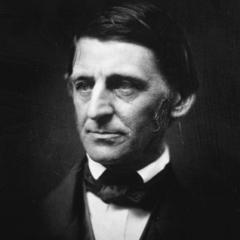
Ralph Waldo Emerson
American essayist, poet, and philosopher. Born on May 25, 1803, and died on April 27, 1882. Known for his transcendentalist philosophy, his works have had a profound impact on literature and the intellectual world. more
You May Also Like
Source: Biographical memoir. Illustrations of the Huttonian theory of the earth
Source: A complete guide to the Lakes, comprising minute directions for the tourist, with mr. Wordsworth's Description of the scenery of the country, &c. and Three letters upon the geology of the Lake district, by prof. Sedgwick
“But nature flies from the infinite; for the infinite is imperfect, and nature always seeks an end.”
Source: Complete Works of Aristotle, Volume 1: The Revised Oxford Translation
Source: The Works of Abraham Cowley: With a Preface, Biographical and Critical by Samuel Johnson
“It has yet to be proven that intelligence has any survival value.”
“Everything in nature is bipolar, or has a positive and a negative pole.”
Source: The Essential Writings of Ralph Waldo Emerson