Quotessence
Home / Quotes / Quote by Lord Byron

Quote by Lord Byron

“[My advice] will one day be found With other relics of 'a former world,' When this world shall be former, underground, Thrown topsy-turvy, twisted, crisped, and curled, Baked, fried or burnt, turned inside-out, or drowned, Like all the worlds before, which have been hurled First out of, and then back again to Chaos, The Superstratum which will overlay us.”

Quote by Lord Byron

Work

DON JUAN

Lord Byron's Don Juan is a sprawling epic poem written in ottava rima, composed over several years until the author's death. Unlike traditional portrayals of Don Juan as a predatory seducer, Byron's protagonist is depicted as a handsome but largely unwitting figure who is seduced by others and drifts through a variety of amorous and picaresque encounters. The poem blends comedy, romance, and sharp social satire, targeting hypocrisy in politics, religion, and society. It ranges across settings from Spain to Greece, Turkey, Russia, and England, offering a panoramic view of early 19th-century European mores. The work is noted for its digressive style, witty narrator, and irreverent tone, and it remains one of the most celebrated examples of Romantic satire. more
Author

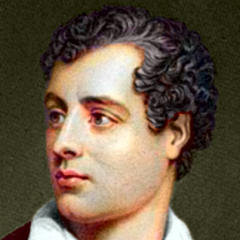
Lord Byron
Lord Byron

Lord Byron, born on January 22, 1788, and died on April 19, 1824, was a prominent English Romantic poet. His poetry is characterized by its strong personality and passion, and has had a profound impact on literature. more

You May Also Like

“This speaker reminds me of my childhood in Budapest. There were gypsy magicians who came to town to entertain us children. But as I recollect, there was one important difference: the gypsy only seemed to violate the laws of nature, he never really violated them!”

“Finally, in regard to those who possess the largest shares in the stock of worldly goods, could there, in your opinion, be any police so vigilant and effetive, for the protections of all the rights of person, property and character, as such a sound and comprehensive education and training, as our system of Common Schools could be made to impart; and would not the payment of a sufficient tax to make such education and training universal, be the cheapest means of self-protection and insurance?”