“This spontaneous emergence of order at critical points of instability, which is often referred to simply as "emergence," is one of the hallmarks of life. It has been recognized as the dynamic origin of development, learning, and evolution. In other words, creativity-the generation of new forms-is a key property of all living systems.”
Quote by Fritjof Capra
Work
The Ecology of Law: Toward a Legal System in Tune with Nature and Community
This book delves into the relationship between law and the natural environment, proposing a legal system that respects ecological balance and community interests. It examines the challenges and opportunities for integrating environmental considerations into legal practice. more
Author
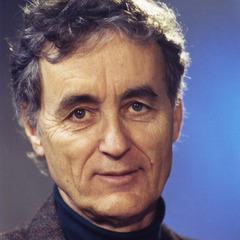
Fritjof Capra
Fritjof Capra (born February 1, 1939) is an Austrian-born American physicist, systems theorist, and ecological thinker. He is best known for his 1975 book 'The Tao of Physics', which explores parallels between modern physics and Eastern mysticism. Capra advocates for deep ecology and systems thinking, integrating science, society, and ecology. His works, including 'The Turning Point' and 'The Web of Life', have influenced global environmental movements and interdisciplinary studies. He co-founded the Center for Ecoliteracy in Berkeley, California, promoting sustainable education. Capra's ideas have sparked both acclaim and criticism, but he remains a key figure in paradigm shift discourse. more
You May Also Like
“This survival of the fittest implies multiplication of the fittest.”
Source: Lay Sermons, Addresses, and Reviews
Source: Letters of Asa Gray
Source: Delphi Complete Works of Charles Darwin (Illustrated)