Quotessence
Home / Quotes / Quote by Thomas Kuhn

Quote by Thomas Kuhn

“We may... have to relinquish the notion, explicit or implicit, that changes of paradigm carry scientists and those who learn from them closer and closer to the truth... The developmental process described in this essay has been a process of evolution from primitive beginnings-a process whose successive stages are characterized by an increasingly detailed and refined understanding of nature. But nothing that has been or will be said makes it a process of evolution toward anything.”

Quote by Thomas Kuhn

Author
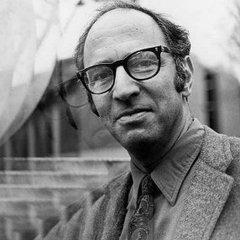
Thomas Kuhn
Thomas Kuhn

Thomas Kuhn (July 18, 1922 - June 17, 1996) was an influential American philosopher of science, known for his contributions to the theory of scientific revolution. His work has had a profound impact on the fields of philosophy of science, history of science, and science studies. more

You May Also Like

“We see not only thought as participating in evolution as an anomaly or as an epiphenomenon; but evolution as so reducible to and identifiable with a progress towards thought that the movement of our souls expresses and measures the very stages of progress of evolution itself. Man discovers that he is nothing else than evolution become conscious of itself.”

“Well, it [evolution] is a theory, it is a scientific theory only, and it has in recent years been challenged in the world of science and is not yet believed in the scientific community to be as infallible as it once was believed. But if it was going to be taught in the schools, then I think that also the biblical theory of creation, which is not a theory but the biblical story of creation, should also be taught.”

“When Franklin drew the lightning from the clouds, he little dreamed that in the evolution of science his discovery would illuminate the torch of Liberty for France and America. The rays from this beacon, lighting this gateway to the continent, will welcome the poor and the persecuted with the hope and promise of homes and citizenship.”

“Why do some die and some live? The answer was clearly, that on the whole the best fitted live. From the effects of disease the most healthy escaped; from enemies, the strongest, swiftest, or the most cunning; from famine, the best hunters or those with the best digestion; and so on. Then it suddenly flashed upon me that this self-acting process would necessarily improve the race, because in every generation the inferior would inevitably be killed off and the superior would remain-that is, the fittest would survive.”

“Yet man does recognise himself [as an animal]. But I ask you and the whole world for a generic differentia between man and ape which conforms to the principles of natural history, I certainly know of none... If I were to call man ape or vice versa, I should bring down all the theologians on my head. But perhaps I should still do it according to the rules of science.”

“You know, all is development. The principle is perpetually going on. First, there was nothing, then there was something; then-I forget the next-I think there were shells, then fishes; then we came-let me see-did we come next? Never mind that; we came at last. And at the next change there will be something very superior to us-something with wings. Ah! That's it: we were fishes, and I believe we shall be crows.”

“You must not say that this cannot be, or that that is contrary to nature. You do not know what Nature is, or what she can do; and nobody knows; not even Sir Roderick Murchison, or Professor Huxley, or Mr. Darwin, or Professor Faraday, or Mr. Grove, or any other of the great men whom good boys are taught to respect. They are very wise men; and you must listen respectfully to all they say: but even if they should say, which I am sure they never would, 'That cannot exist. That is contrary to nature,' you must wait a little, and see; for perhaps even they may be wrong.”