“The shortest way to arrive at glory should be to do that for conscience which we do for glory. And the virtue of Alexander appears to me with much less vigor in his theater than that of Socrates in his mean and obscure. I can easily conceive Socrates in the place of Alexander, but Alexander in that of Socrates I cannot.”
Quote by Michel de Montaigne
Work
Essays of Michael Seigneur de Montaigne: In Three Books with Marginal Notes and Quotations. And an Account of the Author's Life. With a Short Character of the Author and Translator,
The book is a compilation of essays written by the French philosopher and writer Michael Seigneur de Montaigne. It is divided into three books and includes annotations and extracts. Additionally, it provides insights into Montaigne's life and a concise biography of both Montaigne and the translator. more
Author
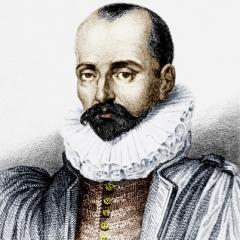
Michel de Montaigne
Michel de Montaigne was a French Renaissance philosopher, essayist, and writer. He is considered one of the most significant figures in the history of the essay. Montaigne's work, particularly his book 'Essays', has been influential in the development of modern prose. more
You May Also Like
Source: Montaigne's Essays: Top Essays
“The only good histories are those written by those who had command in the events they describe.”
“I'm very 'spur of the moment'. I'm always trying to think of fun things to do to create a memory.”
Source: Essays [tr. by Cotton
Source: Works, Comprising His Essays, Letters, and Journey Through Germany and Italy: With Notes from All the Commentators, Biographical and Bibliographical Notices &c., &c
Source: Montaigne's Essays: Top Essays