Quotessence
Home / Quotes / Quote by Thomas Hobbes

Quote by Thomas Hobbes

Work

Leviathan

Leviathan is a seminal work in political philosophy, examining the relationship between the ruler and the ruled, the nature of government, and the social contract. It argues for the absolute power of the sovereign and the necessity of a strong central authority to maintain order and stability in society. more
Author

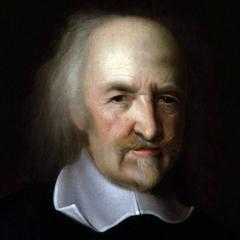
Thomas Hobbes
Thomas Hobbes

Thomas Hobbes, a British philosopher, politician, historian, economist, and writer, was born on April 5, 1588, in Wiltshire, and died on December 4, 1679, in Oxford, England. Hobbes is considered one of the most important philosophers of the 17th century, known for his profound analysis of the state, society, and human behavior. more

You May Also Like

“Good and Evil are names that signify our appetites and aversions, which in different tempers, customs, and doctrines of men, are different: And diverse men differ not only in their judgment, on the senses of what is pleasant and unpleasant to the taste, smell, hearing, touch, and sight, but also of what is conformable, or disagreeable to Reason, in the actions of the common life. Nay, the same man, in diverse times, differs from himself, and one time praiseth, that is, calleth Good, what another time he dispraiseth, and calleth Evil.”

“If we could suppose a great multitude of men to consent to the observation of justice, and other laws of Nature, without a common Power to keep them all in awe; we might as well suppose all mankind to do the same; and then there neither would be nor need to be any civil government or commonwealth at all, because there would be Peace without subjection.”

“And in these four things, opinion of ghosts , ignorance of second causes, devotion towards what men fear , and taking of things casual for prognostics , consisteth the natural seed of religion ; which by reason of the different fancies, judgments and passions of several men, has grown up into ceremonies so different, that those which are used by one man, are for the most part ridiculous to another.”

“From the same it proceedeth,that men gives different names, to one and the same thing, from the difference of their own passions: As they that approve a private opinion, call it Opinion; but they that mislike it, Haeresie: and yet haeresie signifies no more than private opinion; but has only agreater tincture of choler”

“But all this language gotten, and augmented by Adam and his posterity, was again lost at the tower of Babel , when by the hand of God, every man was stricken for his rebellion, with an oblivion of his former language.”