“Truth is a matter of the imagination. The soundest fact may fail or prevail in the style of its telling: like that singular organic jewel of our seas, which grows brighter as one woman wears it and, worn by another, dulls and goes to dust. Facts are no more solid, coherent, round, and real than pearls are.”
Quote by Ursula K. Le Guin
Work
The Left Hand of Darkness
Ursula K. Le Guin's novel is set in a distant future where human-like beings called the Ekumen live on various planets. The story follows a male human envoy, Genly Ai, who travels to the planet Gethen to win its inclusion in the Ekumen. The inhabitants of Gethen are ambisexual, capable of changing their gender, which adds a unique perspective to the narrative and raises questions about gender identity and human nature. more
Author
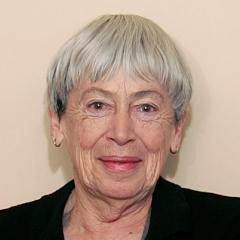
Ursula K. Le Guin
Ursula K. Le Guin, born on October 21, 1929, is an esteemed American author of science fiction and fantasy. Known for her profound philosophical insights, rich imagination, and unique narrative style, Le Guin's works have won numerous literary awards and have had a significant impact on science fiction and fantasy literature. Her most famous works include the 'Earthsea' series and 'The Left Hand of Darkness', which have won her awards such as the Nebula and Hugo Awards, and she has also received the National Book Award for lifetime achievement for her contributions to literature. more
You May Also Like
Source: The Winged Watchman
“Truth is a continuous examination, and Fact... always supersedes belief.”
Source: African Origins of the Major "Western Religions"
Source: The White Luck Warrior
Source: How to Read a Book: The Classic Guide to Intelligent Reading
Source: The Atonement Child
Source: The Grammar of Science
Source: On the Reception of the 'Origin of Species'