“must acknowledge, that to act properly is much more valuable than to think justly or reason acutely.”
Quote by Thomas Reid
Work
Essays on the powers of the human mind: An essay on quantity. An analysis of Aristotl's logic
The text examines the potential and limitations of human thought, providing an in-depth examination of Aristotle's logical theories. more
Author
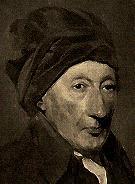
Thomas Reid
Thomas Reid (April 26, 1710 – October 7, 1796) was a Scottish philosopher and a key figure of the Scottish Enlightenment. He founded the Scottish School of Common Sense, which sought to counter David Hume's skepticism by grounding philosophy in intuitive principles of common sense. Reid studied and taught at the University of Aberdeen, later becoming Professor of Moral Philosophy at the University of Glasgow. His major works, An Inquiry into the Human Mind on the Principles of Common Sense and Essays on the Intellectual Powers of Man, argued that perception directly grasps external objects, rejecting the theory of ideas. His ideas influenced 19th-century Scottish philosophy, French spiritualism, and 20th-century analytic philosophy. more
You May Also Like
Source: Thomas Reid's Inquiry and Essays
Source: The View From Nowhere
Source: Clapton: The Autobiography
“We are born of risen apes, not fallen angels.”
Source: The Hunting Hypothesis: A Personal Conclusion Concerning the Evolutionary Nature of Man
Source: The Nature of Necessity
Source: Long Live Hitch: Three Classic Books in One Volume
Source: The God Delusion
“It is more difficult to give money away intelligently than to earn it in the first place.”