Quotessence
Home / Quotes / Quote by Francis Wayland Parker

Quote by Francis Wayland Parker

“Work is the greatest means of education. To train children to work, to work systematically, to love work, and to put their brains into work, may be called the end and aim of schools. In education, no work should be done for the sake of the thing done, but for the sake of the growing mind.”

Quote by Francis Wayland Parker

Author
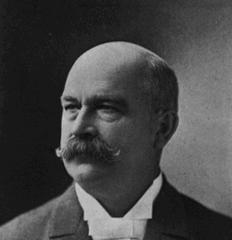
Francis Wayland Parker

Francis Wayland Parker was an American educator in the late 19th and early 20th centuries, whose educational philosophy and methods had a profound impact on subsequent educational reforms. more

You May Also Like

“The policy of letting the child 'do what he likes' is an insidious one, since the children are encouraged to continue always at their original superficial level, without receiving guidance in study. Furthermore, the 'three Rs,' the fundamental tools, are neglected as long as possible, with the result that the child's chance to develop his mind is greatly retarded. The policy of teaching words via pictures instead of by the alphabet tends to deprive the young child of the greatest reasoning tool of all.”

“Dogma is actually the only thing that cannot be separated from education. It IS education. A teacher who is not dogmatic is simply a teacher who is not teaching. There are no uneducated people; only most people are educated wrong. The true task of culture today is not a task of expansion, but of selection-and-rejection. The educationist must find a creed and teach it.”

“Children are prepared for democracy by being led to discuss current events without first learning the systematic subjects (politics, economics, history) which are necessary in order to discuss them. The Mole effect is to substitute slogans and superficial opinion for considered individual thought. And the opinion is that of the lowest common denominator of the group.”

“The real difficulty is that people have no idea of what education truly is. We assess the value of education in the same manner as we assess the value of land or of shares in the stock-exchange market. We want to provide only such education as would enable the student to earn more. We hardly give any thought to the improvement of the character of the educated. The girls, we say, do not have to earn; so why should they be educated? As long as such ideas persist there is no hope of our ever knowing the true value of education.”