Quotessence
Home / Quotes / Quote by Woodrow Wilson

Quote by Woodrow Wilson

“The legislator must be in advance of his age. Across the mind of the statesman flash ever and anon the brilliant, though partial, intimations of future events.... Something which is more than fore-sight and less than prophetic knowledge marks the statesman a peculiar being among his contemporaries.”

Quote by Woodrow Wilson

Book:Papers

Work

Papers

This book, titled 'Papers,' likely compiles a series of written documents or scholarly articles, each addressing distinct subjects or themes. The content may range from research findings and theoretical discussions to practical analyses, presented in a formal, evidence-based style typical of academic or professional papers. Without additional context, the specific topics, authors, or purposes remain unspecified, but the title suggests a focus on structured, written communication intended for an informed audience. more

Author

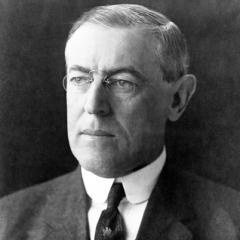
Woodrow Wilson
Woodrow Wilson

Woodrow Wilson was the 28th President of the United States, known for his foreign policy during World War I and his efforts at the Paris Peace Conference. He advocated for the New Freedom policy and had a deep academic background in history, politics, and economics. more

You May Also Like

“There is a very holy and a very terrible isolation for the conscience of every man who seeks to read the destiny in affairs for others as well as for himself, for a nation as well as for individuals. That privacy no man can intrude upon. That lonely search of the spirit for the right perhaps no man can assist.”

“The welfare, the happiness, the energy and spirit of the men and women who do the daily workis the underlying necessity of all prosperity.... There can be nothing wholesome unless their life is wholesome; there can be no contentment unless they are contented.”

“Today, supremely, it behooves us to remember that a nation shall be saved by the power that sleeps in its own bosom; or by none; shall be renewed in hope, in confidence, in strength by waters welling up from its own sweet, perennial springs. Not from above; not by patronage of its aristocrats. The flower does not bear the root, but the root the flower.”