Quotessence
Home / Quotes / Quote by Rudolf Steiner

Quote by Rudolf Steiner

“Every human being shall see in each and all of his fellow-men a hidden divinity... that every human being is made in the likeness of the Godhead. When that time comes there will be no need for any religious coercion; for then every meeting between one man and another will of itself be in the nature of a religious rite, a sacrament.”

Quote by Rudolf Steiner

Author
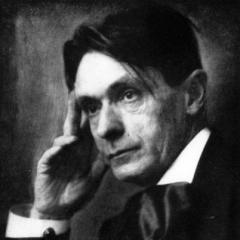
Rudolf Steiner
Rudolf Steiner

Rudolf Steiner was a renowned philosopher, educator, social reformer, and spiritual scientist. Born on February 27, 1861, and died on March 30, 1925, Steiner is known as a pioneer of holistic education and the founder of the Waldorf education system. His ideas and contributions have had a profound impact on the fields of art, architecture, agriculture, and anthropology. more

You May Also Like

“As far as nonviolence and Spiritual Activism, Marshall Rosenberg is it! Nonviolent Communication: A Language of Life, is essential reading for anyone who wants to improve their communication skills. Applying the concepts within the book will help guide the reader towards a more loving, compassionate, and nonviolent way of understanding and functioning with others, and foster more compassion in the world. I highly recommend this book.”

“If, then, there is some end of the things we do, which we desire for its own sake (everything else being desired for the sake of this), and if we do not choose everything for the sake of something else (for at that rate the process would go on to infinity, so that our desire would be empty and vain), clearly this must be the good and the chief good.”

“Great and frequent reverses can crush and mar our bliss both by the pain they cause and by the hindrance they offer to many activities. Yet nevertheless even in adversity nobility shines through, when a man endures repeated and severe misfortune with patience, not owing to insensibility but from generosity and greatness of soul.”

“There are three things that are the motives of choice and three that are the motives of avoidance; namely, the noble, the expedient, and the pleasant, and their opposites, the base, the harmful, and the painful. Now in respect of all these the good man is likely to go right and the bad to go wrong, but especially in respect of pleasure; for pleasure is common to man with the lower animals, and also it is a concomitant of all the objects of choice, since both the noble and the expedient appear to us pleasant.”