Quotessence
Home / Quotes / Quote by Virginia Woolf

Quote by Virginia Woolf

Work

Mrs. Dalloway

Virginia Woolf's Mrs. Dalloway is a stream-of-consciousness narrative that delves into the mind of its protagonist, Clarissa Dalloway, as she prepares for a party. The novel is renowned for its innovative narrative style and its portrayal of the complexities of human consciousness and relationships. more
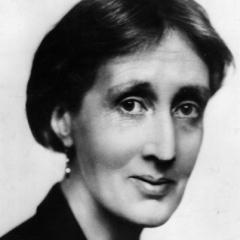
Author

Virginia Woolf
Virginia Woolf

British modernist writer, known for her unique narrative techniques and profound portrayal of female experience. Her works include 'To the Lighthouse' and 'Mrs. Dalloway'. more

You May Also Like

“The sight of the wall of water outside reassured me, giving me the idea that it made very little difference whether I stayed with her, or set out alone on my journey that had neither visible starting point nor destination. It didn't matter: since, however closely I became involved with another existence, my own world would always remain secret, inaccessible and shut-off; nobody would ever see me, except as a dim, changeable, wavering shadow, through its impenetrable, semi-opaque walls.”

“Compreendera então, julgo, a natureza da minha situação. A solidão de um é amenizada pela solidão de outro, e deste modo, mesmo na miséria, existe uma espécie de partilha, de comunhão, a que não se pode dar o nome de alegria mas algo como um encolher de ombros. O estudante franzino fora durante os meus primeiros meses de isolamento esse encolher de ombros, a minha resignação perante a brutalidade daquilo que me acontecera. Que ele tivesse alguém e eu não perturbava-me, colocava um entrave à nossa amizade, um ponto final no nosso monólogo. De uma certa maneira que não sei explicar senão com palavras incoerentes, até então tinha sido como se eu tivesse dado um passo ao lado que me tivesse feito sair do mundo, um pequeno passo discreto e silencioso de retirada. Após essa noite, o mundo notou a minha falta e deu também ele um passo ao lado, mas um passo do mundo é muito maior do que um passo dos nossos, e num certo sentido eu fiquei atrás das coisas, deslocado.”

“Ged saw all these things from outside and apart, alone, and his heart was very heavy in him, though he would not admit to himself that he was sad. As night fell he still lingered in the streets, reluctant to go back to the inn. He heard a man and a girl talking together merrily as they came down the street past him towards the town square, and all at once he turned, for he knew the man's voice. He followed and caught up with the pair, coming up beside them in the late twilight lit only by distant lantern-gleams. The girl stepped back, but the man stared at him and then flung up the staff he carried, holding it between them as a barrier to ward off the threat or act of evil. And that was somewhat more than Ged could bear. His voice shook a little as he said, "I thought you would know me, Vetch." Even then Vetch hesitated for a moment. "I do know you," he said, and lowered the staff and took Ged's hand and hugged him round the shoulders-" I do know you! Welcome, my friend, welcome! What a sorry greeting I gave you, as if you were a ghost coming up from behind– and I have waited for you to come, and looked for you-”

“One of the reasons that hiddenness is such an important aspect of the spiritual life is that it keeps us focused on God. In hiddenness we do not receive human acclamation, admiration, support, or encouragement. In hiddenness we have to go to God with our sorrows and joys and trust that God will give us what we most need. In our society we are inclined to avoid hiddenness. We want to be seen and acknowledged. We want to be useful to others and influence the course of events. But as we become visible and popular, we quickly grow dependent on people and their responses and easily lose touch with God, the true source of our being. Hiddenness is the place of purification. In hiddenness we find our true selves.”

“Was I (am I not still?) a victim of words and books merely, and are books just an excuse for living, living things out in parenthesis, even in the most desolate stony place as I was, quotations and misquotations raining down on me thick and fast – words, words, words – the multitude of words, a parody of rain? For after all, as old Mrs Feany said, the rain is healthy. And the rain it raineth everyday. But the stuff of books and solitude and spying on the poor, could they be healthy? Or were my doubts the real heresy and treason? What book ever changed the world? It seems a solipsism to say that what changes the way we see the world, changes the world, but it is not. Where do you want me to begin? The Bible, Das Kapital? The Divine Comedy, The Satanic Verses?”