Quotessence
Home / Quotes / Quote by Russell Kirk

Quote by Russell Kirk

“The first obligation is to Truth, and that a Truth derived from an apprehension of an order more than natural or material. I think that man who will not acknowledge the Author of their being have no sanction for truth Dedication to an abiding Truth and to the spiritual aspirations of humanity excised, the pursuit of power and the gratification of concupiscence are the logical occupations of rational men in a world that is merely human and merely natural.”

Quote by Russell Kirk

Work

Academic Freedom: An Essay in Definition

Browse quotes and source details for this work. more

Author
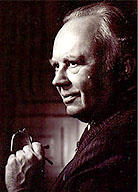
Russell Kirk
Russell Kirk

Russell Kirk, an American historian, was born in October 1918 and died on April 29, 1994. His research focused on conservative thought, American history, and culture, and had a profound impact on 20th-century American politics and culture. more

You May Also Like

“[in response to Jean-François, who claimed that, "there is no irrevocable liberty for the former slaves except that which the Spanish monarch would grant them because, as a legitimate king, he alone has the right to legitimate that freedom"] . . . [W]e are free by natural right. It could only be kings . . . who dare claim the right to reduce into servitude men made like them and whom nature has made free.”

“Every constitution, then, every law naturally expires at the end of 19 years...If it be enforced longer, it is an act of force and not of right... The people cannot assemble themselves; their representation is unequal and vicious. Various checks are opposed to every legislative proposition. Factions get possession of public councils. Bribery corrupts them. Personal interests lead them astray from the general interests of their constituents; and other impediments arise so as to prove to every practical man that a law of limited duration is much more manageable than one that needs repeal...”

“The United Nation's Universal Declaration of Human Rights follows the same intrinsic logic, namely, the power behind any constitution or charter is derived from the legitimate authority of a state; the legitimate authority of a state, in turn, rests upon a mandate to promote and protect freedom, justice, and peace; this mandate requires that every state recognize the natural rights and the intrinsic dignity of every human being (because freedom, justice, and peace cannot be achieved without the protection of natural rights). If any state fails to protect the natural rights of human beings, that state loses its legitimacy and its right to govern and can be legitimately rebelled against in the interest of justice, peace, and freedom.”

“Free speech, rightly understood is a lesser form of combat intended to preserve peace, which is to say, a form of invasive coercion that cannot be otherwise. It is combat with purpose, with social utility, and its value is social. In other words it is a contingent liberty designed to have a social benefit. But in the modern context it is reinterpreted individualistically, so that it becomes a special prerogative of individuals which they claim for themselves alone without regard to any social good. Free speech is ‘my right’ and is defended not because it is better for everyone in the long run but because it is something I am allowed to do and no one can stop me.”

“Your friends and I want you to stay aware of your surroundings, James Ed. These days you cannot anticipate what a disgruntled, former employee might do.”