Quotessence
Home / Quotes / Quote by James Joyce

Quote by James Joyce

“By an epiphany he meant a sudden spiritual manifestation, whether in the vulgarity of speech or of gesture or memorable phrase of the mind itself. He believed it was for the man of letters to record these epiphanies with extreme care (saving them for later use, that is), seeing that they themselves are the most delicate and evanescent of moments.”

Quote by James Joyce

Author
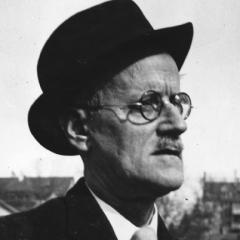
James Joyce
James Joyce

James Joyce, born on February 2, 1882, and died on January 13, 1941, was an Irish novelist and one of the greatest writers of the 20th century. Known for his unique narrative techniques and profound psychological insights, Joyce is celebrated for his contributions to modernist literature. His most famous work is 'Ulysses', which is considered one of the greatest literary works of the 20th century. Other notable works include 'Dubliners' and 'Finnegans Wake'. more

You May Also Like

“Try and write straight English; never using slang except in dialogue and then only when unavoidable. Because all slang goes sour in a short time. I only use swear words, for example, that have lasted at least a thousand years for fear of getting stuff that will be simply timely and then go sour.”

“Whatever one wishes to say, there is one noun only by which to express it, one verb only to give it life, one adjective only which will describe it. One must search until one has discovered them, this noun, this verb, this adjective, and never rest content with approximations, never resort to trickery, however happy, or to vulgarism, in order to dodge the difficulty.”

“This element of surprise or mystery — the detective element as it is sometimes rather emptily called — is of great importance in a plot. It occurs through a suspension of the time-sequence; a mystery is a pocket in time, and it occurs crudely, as in "Why did the queen die?" and more subtly in half-explained gestures and words, the true meaning of which only dawns pages ahead. Mystery is essential to a plot, and cannot be appreciated without intelligence.”

“The test of a round character is whether it is capable of surprising in a convincing way. If it never surprises it is flat. Flat characters ... in their purest form ... are constructed round a single idea or quality; when there is more than one factor to them, we get the beginning of the curve toward the round. The really flat character can be experessed in one sentence such as, "I will never desert Mr Micawber." There is Mrs Micawber - she says she won't desert Mr Micawber; she doesn't, and there she is.”