Quotessence
Home / Quotes / Quote by Niels Henrik Abel

Quote by Niels Henrik Abel

“There are very few theorems in advanced analysis which have been demonstrated in a logically tenable manner. Everywhere one finds this miserable way of concluding from the special to the general and it is extremely peculiar that such a procedure has led to so few of the so-called paradoxes.”

Quote by Niels Henrik Abel

Author
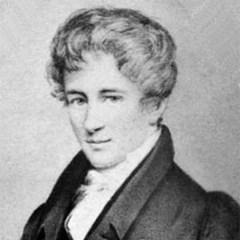
Niels Henrik Abel
Niels Henrik Abel

Niels Henrik Abel was a Norwegian mathematician who made significant contributions to the field of mathematics, particularly in elliptic functions and integral equations. His work had a profound impact on later mathematicians, especially his proof that algebraic equations cannot be solved by radicals, known as the Abel-Ruffini theorem. more

You May Also Like

“Before I got to Juilliard I remember that I had learned the first few bars to all the Sachse etudes in several different keys because I knew what was coming. So in the first year he was throwing these Sachse etudes at me and I would knock off the first eight bars and fly right through it. He would say, 'Alright, that's good enough.' But, in my third year, he said 'Get out the Sachse book.' I couldn't understand why. So I pull it out and he said, 'Here, start in the middle.' I was in trouble! He said, 'Hey Balm, I took you for a guy who knows how to transpose-you're nothing but a bugler!'”

“He wanted us to play whatever we played in the most characteristic and appropriate style. Even it was the theme from 'The Godfather,' you needed to play that then the way that a Hollywood producer would expect it to be played. Whether it was that or the posthorn solo from Mahler's Symphony No. 3, he would expect that to be played in the way that Leonard Bernstein wanted to hear it. In retrospect, I think it was a sensational way to teach this particular group of students. By the time you graduated you could absolutely read anything with any trumpet.”

“His lessons were chock-full of analogies for a variety of musical situations. Those little things were my favorites. 'No . . . that's too much vibrato. It's like putting bright red lipstick on a beautiful woman.' I always thought it was funny that when you broke a musical rule-like accenting a weak beat-he would turn his head away from you sharply, almost as though he were in pain. It's like you just slapped him in the face by being unmusical.”