Quotessence
Home / Quotes / Quote by Elbert Hubbard

Quote by Elbert Hubbard

Work

A Thousand & One Epigrams: Selected from the Writings of Elbert Hubbard

This book is a compilation of epigrams, concise sayings, and thoughts, drawn from the extensive writings of Elbert Hubbard. Hubbard, known for his influential and thought-provoking works, is celebrated for his insights on life, philosophy, and personal growth. The epigrams within this volume are chosen to reflect the essence of Hubbard's writing style and his profound influence on readers. more

Author
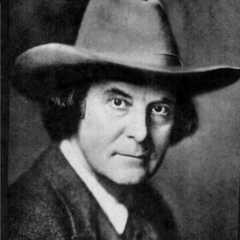
Elbert Hubbard
Elbert Hubbard

Elbert Hubbard was a prominent writer, publisher, and philosopher. He is best known for his magazine 'The Roycroft Studio' and his autobiography 'My Life and Work'. Hubbard's works emphasized the importance of craftsmanship, simple living, and self-improvement. more

You May Also Like

“Before I got to Juilliard I remember that I had learned the first few bars to all the Sachse etudes in several different keys because I knew what was coming. So in the first year he was throwing these Sachse etudes at me and I would knock off the first eight bars and fly right through it. He would say, 'Alright, that's good enough.' But, in my third year, he said 'Get out the Sachse book.' I couldn't understand why. So I pull it out and he said, 'Here, start in the middle.' I was in trouble! He said, 'Hey Balm, I took you for a guy who knows how to transpose-you're nothing but a bugler!'”

“He wanted us to play whatever we played in the most characteristic and appropriate style. Even it was the theme from 'The Godfather,' you needed to play that then the way that a Hollywood producer would expect it to be played. Whether it was that or the posthorn solo from Mahler's Symphony No. 3, he would expect that to be played in the way that Leonard Bernstein wanted to hear it. In retrospect, I think it was a sensational way to teach this particular group of students. By the time you graduated you could absolutely read anything with any trumpet.”

“His lessons were chock-full of analogies for a variety of musical situations. Those little things were my favorites. 'No . . . that's too much vibrato. It's like putting bright red lipstick on a beautiful woman.' I always thought it was funny that when you broke a musical rule-like accenting a weak beat-he would turn his head away from you sharply, almost as though he were in pain. It's like you just slapped him in the face by being unmusical.”

“There is a form of poetic and esthetic and moral genius necessary to make philosophical issues truly incandesce for students, and even though I indeed had some world-class professors myself when I went through the curriculum, I rarely saw such gnosic or concretist/poetic passion among them. I am not speaking of broad histrionics or melodramatic delivery, but rather a moral investment of concern, of loving delight and pathos in exposing one's consciousness to the full horrific and magnificent implications of the materials.”