Quotessence
Home / Quotes / Quote by John Coltrane

Quote by John Coltrane

Author

John Coltrane
John Coltrane

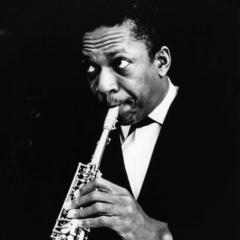
John Coltrane was an American jazz saxophonist and composer known for his unique musical style and significant contributions to jazz. His career spanned the mid-20th century, profoundly influencing later jazz musicians. more

You May Also Like

“I notice that Indians love to tweet about each other - will be like, yeah, go India, we're awesome, Indians are awesome, here is another example of an awesome Indian. That's a dangerous false nationalism that I am not interested in. There's a huge amount of diversity within our so-called communities; within the South Asian community, there are people who would never talk to each other.”

“The most important change, and it's been going on for at least three decades, is the increasing "professionalization," if that's a word, of the faculty. By professionalization I mean the tendency of faculty members to have Ph.D.'s in their academic specialties, and for these specialties to be ever more narrowly defined. The higher-rated schools may have chief executives in residence or retired execs on three-year teaching fellowships, but the days when most faculty members had considerable prior experience as businessmen or women - those days are mostly over.”

“All that rejection from Republicans has a bit of a racist element. It was very necessary to have a black president, and it's been a great thing. It will help, in the end, to ease the trauma of slavery and civil war. The war against slavery cost almost 800,000 American lives - that's how strongly they felt about it. And it's not going to go away in a century.”

“The business schools could do a better job teaching face-to-face management, the actual work of organizing and helping along the efforts of others in the organization. The more quantitative disciplines have gotten more attention, often more research dollars. Areas like organizational science or, even mushier, leadership have had more trouble settling on what it's important to teach, and how. It's rather like strategy itself, which as I argue in the book, has had trouble through most of its history figuring out how to incorporate people, their motivation and ability, into its calculations.”

“One practical point many experts will attest to is that if you want to develop someone as a leader, give them lots of responsibility early in their lives and careers. The military does that. I can remember being officer of the deck on a destroyer, on watch and in charge at two in the morning as we plowed through the Mediterranean while 300 shipmates slept below decks. I was 25 at the time. I don't know how much of a leader I ever became, but the experience certainly brought home to me a sense of responsibility for others.”

“I think it's likely that the civilizing effect of literature has done most of the work, and still continues to do. Look at Steven Pinker's book, The Better Angels of Our Nature: Why Violence Has Declined. It proves beyond any shadow of doubt that violence has declined dramatically throughout the centuries. There are various reasons for it: the rise of the state, Leviathan, the monopoly of violence, children's rights, animal rights. They're all positive signs.”

“People believe that companies have always had strategies, dating back at least to likes of Henry Ford or Andrew Carnegie, maybe to the contractors who built the Pyramids. As it turns out, it was only in the 1960s and 1970s that a new breed of "business intellectuals" began to develop the intellectual framework that allowed companies to look at the three "C's" of any good strategy - namely their costs, customers, and competitors - in an integrated way.”