“Nothing odd will do long. Tristram Shandy did not last.”
Quote by Samuel Johnson
Author
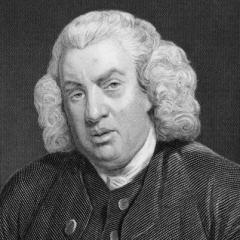
Samuel Johnson
Samuel Johnson was an English writer, poet, and lexicographer, renowned for his comprehensive English dictionary, 'A Dictionary of the English Language', published in 1755. His distinctive writing style and wit have cemented his place as a significant figure in the history of English literature. more
You May Also Like
“From Bard, to Bard, the frigid Caution crept, Till Declamation roar'd, while Passion slept.”
Source: The Works of Samuel Johnson, LL.: D., with an Essay on His Life and Genius
Source: The Works of Samuel Johnson: An essay on the life and genius of Dr. Johnson [by A. Murphy] Poems.- v. 2-4. The rambler.- v. 5. The idler. History of Rasselas, prince of Abissinia.- v. 6-8. The lives of the English poets.- v. 9. Lives of eminent persons. Letters, selected from the collection of Mrs. Piozzi and others. Prayers and meditations.- v. 10. Philological tracts, &c.- v. 11. Miscellaneous tracts, &c. Dedications. Reviews and criticisms. Tales of imagination. The adventurers.-
Source: The Poetical Works of Samuel Johnson, L.L.D.: With an Account of the Author's Life
Source: Johnson's Juvenal: London and The Vanity of Human Wishes
Source: The life of Samuel Johnson, LL. D., comprehending an account of his studies, and numerous works, in chronological order: a series of his epistolary correspondence and conversations with many eminent persons; and various original pieces of his composition, never before published; the whole exhibiting a view of literature and literary men in Great Britain, for near half a century during which he flourished
Source: Selected poetry and prose
Source: The Works of Samuel Johnson, LL.: D., with an Essay on His Life and Genius