Quotessence
Home / Quotes / Quote by Zygmunt Bauman

Quote by Zygmunt Bauman

“There were no "unemployed" in the impoverished Polish countryside before the Second World War. Not a single unemployed. Every child that was born in the peasant family had his room at the table and his job in the field, stable or pigsty... If there was not enough food, everybody got less. If food was plentiful, everybody ate better. In such a setting, we may say, the problem of security couldn't even arise... One was born with life-long rights; the only thing that one could not do was to change them. A setting good on the side of security, though bad on the side of freedom.”

Quote by Zygmunt Bauman

Author
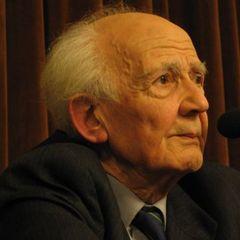
Zygmunt Bauman
Zygmunt Bauman

Zygmunt Bauman (1925-2017) was a Polish-British sociologist and philosopher, widely regarded as one of the most influential social thinkers of the 20th century. He taught sociology at the University of Leeds and was known for his concept of "liquid modernity," which describes the shift from solid, stable social structures to fluid, uncertain conditions. His major works include "Modernity and the Holocaust," "Liquid Modernity," and "Liquid Love." Bauman's analysis of consumer capitalism, social inequality, and the relationship between modernity and genocide has profoundly shaped contemporary sociological thought. more

You May Also Like

“It is so true that in liquid modernity freedom was, so to speak, let off the leash, and for a quite a number of years the freedom of choice was "in principle" unlimited. One result was the weakening of inter-human bonds, particularly inherited bonds, and the counterfactual assumption that individuals must and can fend for themselves.”

“Lev (Léon) Shestov, a Russian Jew who later became a French Jew and even converted to Catholicism, defined God not by His power to create the laws of universe, but His ability to break them at will - the capacity for miracles. God could cancel the past! For instance, God could decide retrospectively, that Socrates was never poisoned... Assimilation demanded a miracle: that you stop having been somebody else before... But only God can do it.”

“There is less pressure on abandoning native communities: what for? There is nothing to be gained by it. On one hand, there are plenty tempting opportunities of experimenting with identities - being one kind of person today and a different the next day. On the other hand, there is little pressure to include the ethnic identity or religious identity into this mechanism, because now everybody is in a kind of Diaspora today.”

“Jews are no longer pressed and obliged to fight, hide or deny their Jewishness. What for? No one actually requires today to abandon the idiosyncrasy of some other culture or ethnic tradition. The great achievement of this last period is that we have been slowly, sometimes reluctantly, yet steadily, learning the art of living with differences.”